Table of Contents

More companies are using Slack as their internal helpdesk for IT, HR, and operations, as well as for hands-on B2B customer support through Slack Connect. Without the right tools, support becomes a matter of scrolling up to find what got missed. Helpdesk tools fix this. They catch requests from channels and DMs, assign owners, track status, catch duplicates, and measure SLAs, response speed, and team load.
What you need to figure out: Do you want Slack to be your entire service desk? Tickets, routing, resolution—all in one place. Or is Slack just another support channel that feeds into a larger system with shared inboxes, knowledge bases, portals, and automation? Most tools land pretty clearly on one side of that line.
TL;DR
8 Slack helpdesk tools compared, with one core question upfront: do you want Slack as your entire service desk, or just one channel feeding a larger system?
The gist
- Tools split into two camps: Slack-native (ClearFeed, Wrangle, Suptask) where agents work entirely in Slack, and Slack-connected (Pylon, Thena, Atlassian Assist, Plain) where Slack feeds a separate app.
- ClearFeed ($24/agent/month or $40/month usage-based) is the only tool covering both internal and external support, with SLAs, AI, omnichannel intake, and native two-way sync to Zendesk, Salesforce, HubSpot, and Jira.
- Suptask is the most affordable Slack-native option (free plan, $7/agent/month paid). Wrangle ($39/agent/month, 3-seat minimum) wins on approvals and workflow automation but is weak on AI and customer support at scale.
- Plain ($35/month entry, $269/month for full AI) is the pick for engineering-adjacent B2B teams needing deep incident.io, Linear, and Jira integrations.
Worth knowing: Atlassian Assist requires JSM Premium ($51.42/agent/month), making it expensive unless you're already on Jira Service Management.
How Did We Evaluate the List of Best Slack Helpdesk Tools?
We scored each tool across a few practical criteria that matter when support actually happens inside Slack, not in a separate tab.
- Slack integration depth: We looked for “Slack-native” behavior: can you turn a message into a ticket, triage it in the same thread, and update status or assignees without leaving Slack? Bonus points for thoughtful UX like message actions and shortcuts, emoji or slash-command triggers, private triage, and true two-way sync so status, comments, and resolution notes stay consistent everywhere.
- The helpdesk basics: A Slack wrapper isn’t enough if it can’t run a real queue. We checked for clear ownership and routing, usable queues with statuses and priorities, structured intake (forms or request types), SLAs and business hours, escalation paths, internal versus external notes, and reporting that answers the everyday questions: what’s open, who owns it, and what’s overdue?
- Internal vs. External support readiness: If the tool claims to work for customer support, it should behave cleanly in Slack Connect and shared channels. That means customer-friendly workflows, strong separation between internal coordination and customer-facing updates, support for other channels like Email and Live Chat, strong integration with CRM systems etc. On the other hand, internal support requires support for features like private ticketing, approvals, employee portals etc.
- Automation and workflow design: The goal is less manual chasing and fewer dropped handoffs. So we scored tools on routing rules, categorization, deduping or collision detection, SLA-based escalations, approvals for sensitive steps, and workflows you can configure without needing a services team. If there’s AI, it has to be genuinely useful, like collecting missing details, summarizing context, automatically categorizing tickets or suggesting next steps, without spamming the channel or creating risk.
- Integrations and extensibility: A Slack helpdesk still has to fit into the rest of your stack, so we gave credit for strong integrations with issue trackers, CRMs, shared inbox tools, ops and alerting systems, and analytics. Native integrations are great, but solid APIs, webhooks, clean exports, and flexible reporting also count.
- Price-to-capability: We compared how pricing scales, whether the “useful” features sit behind realistic tiers, how seat minimums work, where what’s gated, and whether there’s a trial or free plan that actually lets you validate the workflow in Slack before committing.
Best Slack Helpdesk Tools at a Glance
The Best Slack Helpdesk Tools for Support Teams
1. ClearFeed
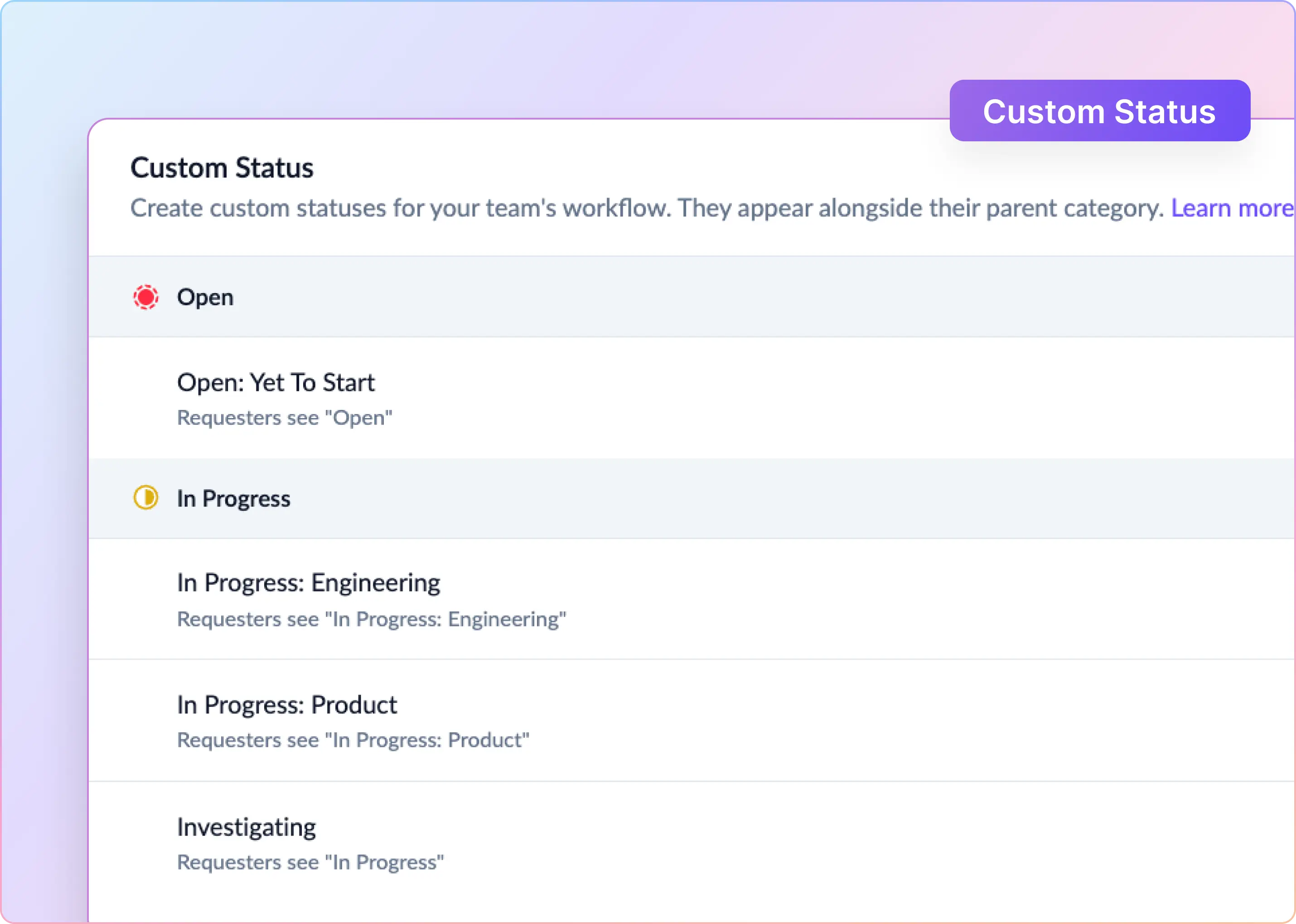
ClearFeed is a Slack-native helpdesk for teams that support customers or internal users in Slack and Slack Connect. It turns Slack conversations into owned tickets with a queue, SLA tracking, and reporting, so you can run support without leaving Slack.
Key Features
- Central triage that doesn’t break context: ClearFeed can route messages from multiple channels into a single triage view so your team can assign, prioritize, and respond from one place. Responses still go back to the original thread in the original channel, so customers never feel like they’re being moved away from Slack.
- Flexible ticket creation: You can decide how tickets are created per channel. Some teams prefer auto-capture for structured channels, while others prefer manual creation (for example, via emoji triggers) in higher-chatter spaces.
- Private Collaboration within Slack: Support teams often need to discuss internally before replying to a customer. ClearFeed supports internal-only collaboration within Slack itself (via Triage channels) and treats “sending externally” as an intentional action, reducing accidental leakage of internal context into customer channels.
- Two-way integrations with support and issue-tracking systems: If your system of record lives outside Slack, ClearFeed keeps both sides aligned. That typically means syncing ticket updates, ownership, status changes, and context so Slack doesn’t become a dead-end.
- Omnichannel intake that still lands in Slack: For teams that want one operational rhythm, ClearFeed can bring in requests from other channels (like email or web chat) while keeping the agent workflow centered in Slack.
- AI-assisted triage support: Instead of pretending AI replaces your team, the practical value here is triage support: grouping related messages into a single request, crafting draft responses for agents using existing knowledge, and using AI to identify what needs attention.
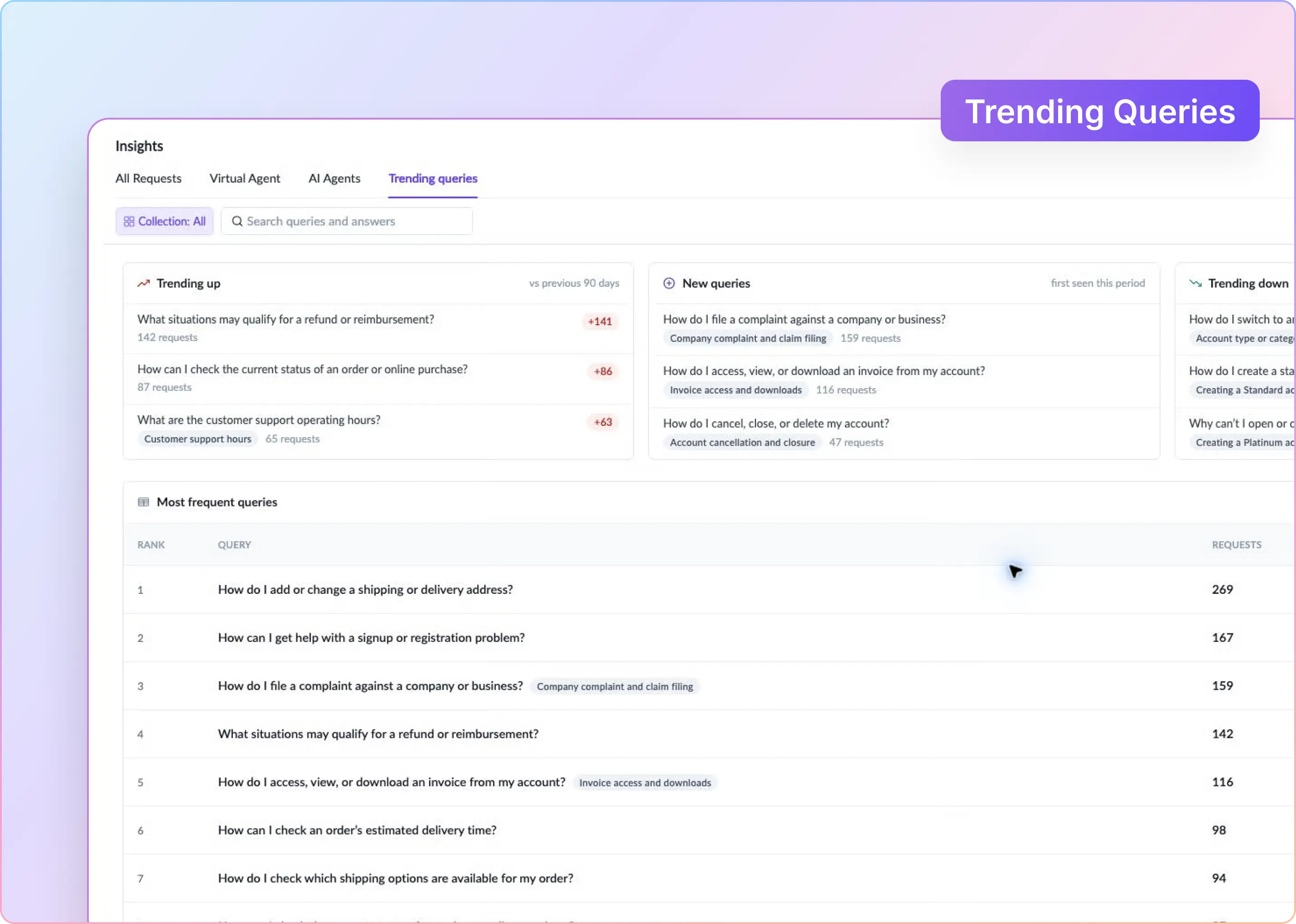
- SLA tracking, reporting, and feedback: ClearFeed is built for teams that want accountability, response, and resolution tracking, visibility into workload, and customer feedback collection after issues are closed.
Pros
- Provides a Slack-first workflow without sacrificing helpdesk rigor (ownership, queues, SLAs, reporting).
- Omnichannel support across email, Slack, and web chat in a Slack-native experience.
- Works well for both internal and external support use cases, with usage-based pricing allowing collaborative support for large teams.
Cons
- If you want extremely deep, enterprise-grade customization in a traditional portal-first helpdesk, you’ll want to validate workflow fit during evaluation.
- Like any Slack-native ticketing system, the tool relies heavily on Slack, and you still need internal norms (what becomes a ticket, what stays a chat) to keep the queue meaningful.
Pricing
- Agent-based (pay per agent): Best when you have a defined support team and want a predictable “support seats” cost.
- Starter: $24/agent/month (1–15 agents)
- Professional: $49/agent/month (1–15 agents)
- Enterprise: custom (15+ agents)
- Usage-based (pay by usage): Pricing is based on channels and tickets, and it’s billed on the higher of the two (with rounding to slabs of 10 channels and 100 tickets). It starts at $40/month (10 channels/100 tickets) and scales with usage.
2. Wrangle
Wrangle is a workflow automation platform built for Slack that helps teams automate processes, manage ticketing, and streamline business requests without leaving Slack. It's used across departments like IT, HR, and Finance for intake, approvals, and tracking.
Key Features
- Turn any Slack message into a trackable ticket
- Intake forms for repeatable requests
- Approval workflows and task routing inside Slack
- Reminders, due dates, and monitoring dashboards
- Audit history and CSV export for compliance
- Integrations with Zendesk, Jira, Notion, Zapier, and webhooks
Pros
- True Slack-native ticketing and approvals with structured workflows
- Combines ticketing and lightweight process automation in one tool
- Real-time Zendesk sync, not just notifications
Cons
- Not suitable for most customer support deployments, agent-based pricing doesn’t scale
- Minimum number of seats and annual commitment required for most plans.
- Limited AI functionality
Pricing
- Pro: $39/agent/month, 3 agent minimum, unlimited tickets, and 5 Slack Connect channels
- Scale: $59/agent/month, native integrations with Zendesk, Jira Service Management, and Notion
- Enterprise: Contact for pricing (advanced features, enhanced support)
3. Suptask
Suptask is a Slack-native ticketing system designed to streamline internal support and customer service workflows. It enables teams to create, manage, and resolve support tickets directly within Slack, eliminating the need to switch between platforms and enhancing collaboration and efficiency.
Key Features
- Create tickets from any Slack message with threaded follow-ups
- Private ticketing for sensitive requests (access, payroll, people ops)
- Custom forms and fields for cleaner intake
- Slack-native views, web overviews, and dashboard analytics
- Approvals, RBAC, AI assistant, CSAT, and white-labeling on higher tiers
- 300+ integrations plus webhooks and REST API
Pros
- Fully Slack-native workflow for tickets, replies, and tracking
- Supports both internal helpdesk and external support patterns
- Agent-based pricing—charges only for responders, not every Slack user
Cons
- Limited interface customization options and AI functionality
- Slack-first by design, so it may not suit teams expecting a traditional portal-based ITSM experience
Pricing
- Free: $0/agent/month (10 tickets/month limit)
- Light: $7/agent/month billed annually (or $8 monthly)
- Professional: $13/agent/month billed annually (or $15 monthly)
- Custom: contact sales (includes email-to-Slack integration, SSO, automations, SLA)
Related Read: How ClearFeed Compares Against Suptask
4. Pylon
Pylon is a customer operations platform designed for modern businesses. It helps manage customer interactions efficiently by unifying multiple support channels, such as Slack, Microsoft Teams, Email, and In-App Chat. With automation, AI-powered tools, and robust analytics, it streamlines workflows and enhances customer experience.
Key Features
- Create and manage support tickets directly from Slack conversations
- Unified inbox across Slack, email, chat widget, ticket forms, and knowledge base
- Broadcasts for incident updates and proactive customer communications
- Integrations, automations, webhooks, and API for custom workflows
- Multi-channel support beyond Slack (email, messaging) from one backend
Pros
- Purpose-built for B2B customer support at scale via Slack Connect
- Unified system across Slack, email, chat widget, forms, and knowledge base
- Broad integrations plus API and webhooks for custom workflows
Cons
- Not a fully Slack-native experience, agents expected to work out of the Pylon app with limited Slack triage support
- Seat minimums on annual plans and high AI costs may be a barrier for smaller teams
- Agent-based pricing is not suitable for collaborative support
Pricing
- Starter: $59/agent/month, support inbox, email, chat widget, ticket forms, and knowledge base
- Professional: $89/agent/month, Slack connector, automations, API, and analytics
- Enterprise: $139/agent/month adds MS Teams and enterprise-grade controls
Related Read: How ClearFeed Compares Against Pylon
5. Thena
Thena is customer support software that plugs into the tools you're already using - Slack, email, Microsoft Teams, and web chat. It handles the boring stuff automatically, like sorting incoming requests and making sure they land with the right person. Everything lives in one place, not scattered across different apps.
Key Features
- Channel-first ticketing—map Slack Connect channels to customer accounts automatically
- Granular control over which channels create tickets, route internally, or just receive updates
- Helpdesk workflows in Slack threads with SLA tracking, CSAT, and account insights
- Omnichannel support across Slack, email, AI web chat, and MS Teams on higher tiers
Pros
- Purpose-built for B2B support in Slack Connect, not just notifications on top of a traditional helpdesk
- Strong customer feedback on Slack integration and case management
Cons
- Service is winding down with customer complaints of poor uptime and reliability
- Not a fully Slack-native experience - agents have to work out of the Thena app
- Agent-based pricing doesn’t scale for collaborative support teams
Pricing
- Starter: $29 per user/month (billed annually), up to 5 seats, up to 1,000 tickets/month, Slack + email included
- Standard: $79 per user/month (billed annually), adds things like AI web chat and API capabilities
- Enterprise: $119 per user/month (billed annually), adds MS Teams and enterprise-grade controls
Related Read: How ClearFeed Compares Against Thena
6. Atlassian Assist
Atlassian Assist, formerly Halp, is a ticketing tool that works in Slack and Microsoft Teams. It integrates with Jira Service Management, so you can manage support tickets without leaving your chat app. You create, update, and close them there. It's built around the fact that most teams already have Slack or Teams open all day.
Key Features
- Convert messages into trackable requests via emoji reactions or slash commands
- Private agent channel for assigning, editing, and responding to requests in chat
- Map request channels to Jira Service Management request types
- Full two-way sync between Slack/Teams and Jira Service Management
- Virtual agent with automatic request recognition (Premium, Slack-only)
Pros
- Cleanest Slack/Teams-to-JSM bridge available, built and maintained by Atlassian
- Works across both Slack and Microsoft Teams for mixed environments
- Structured request types and queues while letting requesters interact naturally in chat
Cons
- Requires Jira Service Management Cloud, which has a complex setup.
- High per-seat cost (JSM premium tier) for a basic Slack ticketing experience. An agent-based pricing model doesn’t scale for collaborative support teams
Pricing
Atlassian Assist is part of Jira Service Management’s Slack integration, which is available at a Premium tier of $51.42 per agent per month (Enterprise is also available).
Related Read: How ClearFeed Compares Against Atlassian Assist
7. Linear Asks
Linear Asks turns Slack messages and emails into Linear issues. You can use it for bug reports, feature requests, IT tickets—basically any internal request that needs tracking. People stay in Slack or email instead of context-switching to Linear every time.
Key Features
- Create requests from Slack—no Linear account needed for requesters
- Convert messages to tickets via emoji or auto-capture every message in a channel
- Forms and required fields for cleaner intake on recurring requests
- Private Asks for sensitive requests outside public channels
- Bi-directional sync between Linear and Slack threads
- Requests route into Linear's Triage inbox for prioritization and assignment
Pros
- Low-friction Slack capture with structured routing into Linear's triage workflow
- Natural fit for teams already using Linear who need a better intake layer
- Supports both Slack and email intake for flexible request submission
Cons
- Not a full helpdesk - designed for intake and routing into Linear, but lacks SLAs and service metrics that are expected in a helpdesk solution
- Missing channel management features required for customer support on a large number of Slack channels.
Pricing
- Business: $16/user/month (required for Linear Asks)
- Enterprise: Contact for pricing (advanced Asks features, SLAs, security)
8. Plain
Plain is an AI-powered support platform designed for B2B teams that streamlines and automates customer support across multiple channels, including Slack, Microsoft Teams, email, and Discord. Its focus is on consolidation, efficiency, and deep integration with other business tools.
Key Features
- Automatic tracking of customer messages across Slack Connect channels into Plain
- Internal Slack discussions for team collaboration without exposing customer threads
- SLAs, business hours, and escalation paths on higher tiers
- AI agent for thread summaries, urgency detection, auto-labeling, and suggested responses
- Integrations with Salesforce, HubSpot, Linear, Jira, incident.io, plus importers from Zendesk, Intercom, and Help Scout
Pros
- Built for Slack Connect support at scale with replies tied to original threads
- Strong operational layer with SLAs, business hours, and escalation workflows
- Broad integrations across support, product, engineering, and incident response teams
Cons
- For Customer Support use cases only.
- High per-seat prices limit scalability for collaborative support in large teams.
Pricing
- Foundation: $35/user/month (core features, multi-channel, basic integrations)
- Horizon: $269/user/month (adds advanced automation, AI, enhanced reporting)
- Frontier: Custom pricing (full customization, dedicated support, enterprise security)
How To Choose the Right Slack Helpdesk Tool in 2026
Pick a Slack helpdesk tool based on what breaks first in your current setup. Losing track of who's handling what? You need ownership tracking. Issues sitting too long? SLAs. Constantly switching apps and losing context? Stay in Slack.
Figure out your actual priority. Could be faster triage, clearer engineering handoffs, leadership visibility, and smoother customer interactions. Start with the mechanics: how it captures requests, how it routes them, whether it syncs with your stack, and whether you can pull reports without digging through three weeks' worth of threads.
Run a pilot with your real workload. A week will tell you what's broken. Maybe you find something easier. Maybe nothing fits your particular mess. At least you'll know before you're locked in. And if you want something that’s built specifically for managing support workflows inside Slack (with ownership, SLAs, integrations, and reporting), it’s worth giving ClearFeed a quick try alongside your shortlist.