July 14, 2026

Slack Help Desk Workflows: Automate Internal Employee Support With Rules, Logic, and AI Agents

WRITTEN BY
Happy Das
Slack Help Desk Workflows: Automate Internal Employee Support With Rules, Logic, and AI Agents
Table of Contents

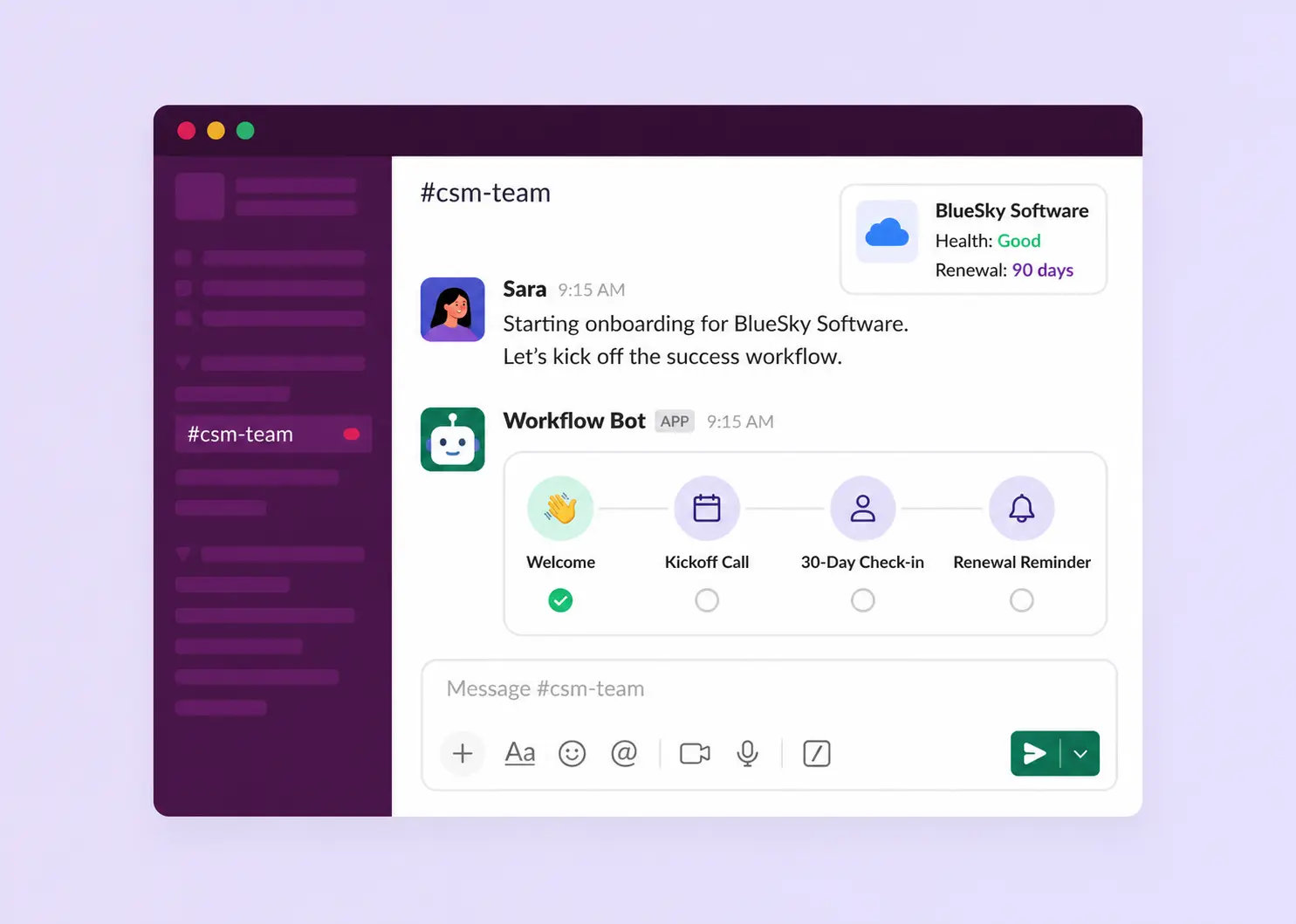
It’s 5:47 PM on a Wednesday. An employee posts in `#it-help`: they need access to a finance tool before an onboarding deadline.

Someone from IT reads the message, opens Jira Service Management, creates a ticket, copies the Slack context into the description, assigns it to the right owner, and then drops the ticket link back into Slack.

None of this is hard work. But it is still 90 seconds of tabs, fields, and copy-paste for something that already has enough context to move automatically. Across password resets, access requests, device issues, HR questions, procurement approvals, and onboarding tasks, those small handoffs add up fast.

That is the gap Slack help desk workflows are meant to close. 

‍

Quick Answer: What Is a Slack Help Desk Workflow?

A Slack help desk workflow is a set of automated steps that move employee requests through your internal support process via Slack. For this guide, we’ll focus on internal help desk workflows: IT, HR, finance, security, procurement, and operations requests that start in Slack.

When an employee request comes in, the workflow can invoke an AI bot, create a ticket and assign it to the right person if not automatically resolved, send SLA reminders when appropriate, collect manager approvals, and sync changes to tools like Jira Service Management, Jira, Linear, ClickUp, or Asana, or within a Slack-native ticketing system like ClearFeed.

ClearFeed runs these workflows in Slack at scale, with built-in forms, private tickets, intelligent assignment, SLA tracking, approval workflows, and AI assistance.

This article focuses only on internal help desk workflows and automation. If you are still deciding what a Slack helpdesk is, when it works, or how it compares with traditional helpdesks, read Slack Helpdesk: What It Is, When It Works, and How To Run Support Inside Slack first.

‍

What Should You Automate in a Slack Help Desk?

Slack helpdesk workflows operate at three automation levels—each more powerful than the last:

Level 1: Rules-Based Workflows

Convert messages from #it-help, forms, email, and portals into a tracked queue. Route by priority, type, or department. Auto-assign by first responder, round robin, or availability - with potentially different policies per queue.

‍

Level 2: Advanced Automations

Add SLA reminders (alert if response targets are missed), escalations to managers or specialists for specific keywords or sentiments (that indicate urgency), multi-level approval chains, and AI assistance (to answer FAQs and auto-fill fields).

‍

Level 3: Agentic AI Execution

Deploy autonomous AI agents that don't just route requests—they execute actions in your internal systems. Examples:

  • Access requests → AI agent autonomously creates Okta access, notifies manager, updates employee record
  • Device requests → AI agent provisions device in JumpCloud, adds to asset inventory (Asset Panda), sends shipping label
  • Onboarding → AI agent creates accounts in BambooHR, sends welcome emails, schedules training, and creates Slack profile
  • Policy compliance → AI agent audits requests against company policies, flags violations, auto-corrects where possible

Start by automating the high-volume, low-ambiguity workflows (password resets, device provisioning, access requests). Graduate to agentic AI as your confidence grows.

‍

How Does Slack Help Desk Automation Work?

Most support-grade Slack workflows can be described with four parts.

Workflow Part What It Means Help Desk Example
Trigger The event that starts the automation. A request is created, a message is added, a ticket is updated, requester satisfaction feedback is submitted, an emoji reaction is added, or an approval workflow is completed.
Condition The rule that decides whether the automation should run. Priority is High, channel is #it-help, request type is Access, requester is in a specific department, approval status is Pending, or trigger time is outside business hours.
Wait The optional delay before the action. Wait 45 minutes before warning the triage channel, cancel if the status changes, or reset the timer when a new requester or responder message arrives.
Action The thing the system does. Set priority, reassign, send a Slack message, create a ticket, trigger a webhook, auto-fill fields, invoke an AI Agent, or run a connected-system action.

‍

Slack Workflow Builder vs. Support-Grade Help Desk Automation

Slack Workflow Builder is fine for simple employee intake: one-off forms or basic notifications. But for internal support operations at scale, native Slack Workflows have limitations. Support-grade platforms like ClearFeed are purpose-built for internal help desk teams.

Need Slack Workflow Builder ClearFeed Automations
Simple form intake âś… Good fit âś… Good fit, with richer routing, conditional fields, and reporting
SLA tracking & alerts ⚠️ Manual timer + message (no real SLA system) ✅ Tracks first response, resolution targets, business hours, and configured SLA reminders or alerts
Assignment logic ⚠️ Can notify channels, not assign ✅ First responder, round-robin, team assignment, and availability-aware routing
Ticket lifecycle tracking ❌ Limited to workflow state ✅ Full lifecycle: request → ticket → sync → reporting
Multi-level approvals ⚠️ Sequential steps only, fragile ✅ Dynamic approvers, fallback logic, full audit trail
Connected systems and records ⚠️ Depends on Slack app, automation, or webhook availability ✅ Create or link internal tasks and tickets in Jira, Linear, ClickUp, or Asana. For IT/HR workflows, trigger supported actions in Okta, JumpCloud, Asset Panda, BambooHR, and Kandji.
Private comments ❌ Everything is visible to the requester ✅ Internal notes stay private; the requester sees only responses
Automation observability ❌ Logs aren't centralized ✅ View all runs, failures, conditions met, and SLA impact
Agentic AI execution ❌ Not available ✅ Autonomous agents that make decisions, validate against policy, execute actions in Okta, JumpCloud, BambooHR, Asset Panda, Kandji, and more

Bottom line: Use Slack Workflow Builder for simple intake. Use ClearFeed if you need SLA tracking, intelligent assignment, multi-level approvals, handoffs to Jira, Linear, Okta, JumpCloud, or BambooHR, or autonomous AI agents that execute access provisioning, device management, and onboarding workflows.

‍

How To Build a Slack Help Desk Automation Workflow?

These steps work in any automation platform (native Slack Workflows, Zapier, Make.com, or ClearFeed). However, ClearFeed automations are purpose-built for support, with out-of-the-box triggers, conditions, and actions designed for internal help desk workflows.

Step 1: Pick One Workflow To Automate First

Choose one workflow with clear volume and pain. Good starting points:

  • Unanswered IT requests after 1 hour (alert the triage channel or assignee)
  • Access requests (send to manager or IT approver for approval)
  • High-priority security/payroll requests (escalate to the right team)
  • Requests assigned to unavailable team members (reassign to backup)

‍

Step 2: Define the Trigger

Be specific about what starts the workflow. Examples include request creation, ticket creation, request update, message added, ticket reaction added, requester satisfaction feedback submitted, or approval workflow completed.

For Slack-native internal intake, common triggers include a message in a request channel, an emoji reaction, a form submission, a private ticket shortcut, or an email, employee portal, or API request routed into Slack triage.

‍

Step 3: Add Conditions To Prevent Noise

Conditions prevent automations from becoming spam. Use them to narrow the workflow by status, priority, assignee, channel, assigned team, requester, department, location, source, business hours, approval workflow status, or custom field values.

For example, "send manager alert after 24 hours" should probably apply only when the status is Pending or Open, not when the ticket is already Solved.

‍

Step 4: Decide Whether To Wait, Reset, or Cancel

A delay is more than a timer. It tells the system when to act.

Use waits for SLA warnings, follow-up reminders, after-hours acknowledgments, stale-request alerts, and recurring incident updates. Reset the delay when a new activity means the conversation is active again. Cancel the delay when a watched field changes, such as status moving from Open to In Progress or from Pending to Solved.

‍

Step 5: Choose the Action

Actions should be explicit and visible. What you can do depends on your automation platform. Common actions across most platforms:

  • Set fields: status, priority, assignee, custom fields
  • Send notifications: Slack messages to channels, DMs, or thread replies
  • Create records or trigger handoffs: create service tickets, create engineering tasks, or call connected systems through supported actions or webhooks
  • Webhooks: call connected APIs or internal workflow endpoints with request data

ClearFeed-specific actions (more powerful):

  • Reassign intelligently: based on round-robin, availability, team assignment, or responder ownership rules
  • Escalate: to managers or specialized teams with full context
  • Update connected systems: update supported ticket, task, identity, asset, device, HR, or webhook data in configured systems instead of creating standalone links only
  • AI assistance: auto-classify requests, fill custom fields, draft responses, or invoke AI Agent (knowledge-powered responder)
  • Private comments: add internal notes that don't reach the requester
  • Approval chains: route access, procurement, finance, HR, or compliance requests to multiple approvers with fallback logic

The more sophisticated your automation needs, the more you need a dedicated helpdesk platform.

‍

Step 6: Monitor and Measure

Assign an owner and review logs regularly to catch broken automations before they impact employee experience. Track metrics that matter to your automation: first-response rates for SLA automations, time-to-assignment for routing, and answer volume for AI assistance.

‍

Where ClearFeed Fits for Slack Help Desk Automation

ClearFeed is built for teams that support employees primarily through Slack but need support-grade automation that native Slack Workflows can't provide. For this article, the strongest fit is internal IT and employee support: access requests, device issues, onboarding, policy questions, procurement approvals, finance requests, and HR workflows.

Specifically, ClearFeed solves the gaps we identified earlier:

Routing & Assignment

  • Route tickets from channels or direct messages based on Form types or AI-determined categories to different request queues.
  • Auto-assign requests using first responder, round-robin, team assignment, or availability-aware logic—not just notifications. Set up assignment policies and owners based on the request queue.
  • Result: The right internal owner sees the request first; fewer tickets need reassignment later.

‍

SLA Tracking & Accountability

  • ClearFeed tracks first-response and resolution times, warns teams before targets are missed, and breaks down performance by request queue, assignee, priority, or custom fields.
  • Result: You hit your internal service commitments; employees know when to expect responses.

‍

Intelligent Escalations

  • Route high-priority or unresolved requests to IT managers, security teams, or specialized departments automatically
  • Multi-level approval workflows for access requests, procurement approvals, HR compliance, or device provisioning with fallback approvers
  • Result: Nothing falls through the cracks; escalations happen at the right time

‍

Multi-Source Employee Intake

  • Slack channels, email, forms, and employee portals feed into a single queue. Requests stay organized and visible—no more scattered tickets across multiple tools.

‍

AI-Powered Assistance & Autonomous Agents

  • Virtual Agents answer routine FAQs (password resets, VPN setup, device provisioning questions) from approved knowledge sources, reducing repetitive ticket volume before requests reach your team.
  • Agentic AI agents go further—they don't just answer questions; they autonomously execute actions. An AI agent can receive an access request, validate it against policy, create the access in Okta, notify the manager, and close the ticket—all without human intervention.
  • Agent Assistant helps responders draft answers and take actions—responders can use AI to quickly create Jira issues, update Okta records, or send notifications without switching tools.
  • Auto-fill fields using AI (classification, sentiment, urgency) to trigger smarter routing and automatic escalations
  • Result: Faster resolution, fewer manual steps, more human time spent on complex issues

‍

Connected System Handoffs & Agentic Execution

  • Create or link internal tasks and tickets in Jira Service Management, Jira, Linear, ClickUp, Asana, and GitHub, with sync behavior depending on the integration and object type.
  • Agentic AI agents autonomously integrate with your IT and HR systems:
    • Okta: AI agent receives access request → validates against policy → creates Okta access → notifies manager → updates employee record → sends confirmation
    • JumpCloud: AI agent provisions macOS/Windows devices → adds to inventory → assigns to employee → sends setup link
    • BambooHR: AI agent creates employee records → triggers onboarding workflows → sends welcome emails
    • Asset Panda: AI agent tracks asset allocation → updates inventory → flags compliance issues
    • Kandji: AI agent checks device compliance → auto-remediates security issues → escalates critical violations
  • The result: Employees submit requests in Slack. AI agents handle the entire workflow in seconds. No manual copy-paste. No context-switching to five different systems. No approval delays.

‍

Autonomous Workflows: Real-World Examples

Here's how agentic AI transforms common internal support workflows:

Access Request Workflow (Okta):

  1. Employee requests access to a finance app in Slack
  2. AI agent validates request against policy
  3. AI creates an access request in Okta
  4. Manager approves (notified in Slack)
  5. AI activates access
  6. Employee notified in Slack with confirmation
  7. Ticket auto-closes. Time to resolution: <5 minutes (vs. 2-3 days manual)

Device Request Workflow (JumpCloud + Asset Panda):

  1. Employee requests a MacBook in Slack
  2. AI agent checks availability and budget
  3. AI provisions a device in JumpCloud
  4. AI adds an asset to the Asset Panda inventory
  5. AI generates a shipping label and sends it to procurement
  6. AI sends employee setup link
  7. Once the device is registered, AI adds to compliance monitoring. Time to resolution: <10 minutes (vs. 1-2 weeks)

Onboarding Workflow (BambooHR + JumpCloud + Slack):

  1. HR creates a new employee in BambooHR
  2. AI agent receives a trigger
  3. AI creates employee accounts in JumpCloud, email, Slack, and other systems
  4. AI sends a welcome email with setup instructions
  5. AI schedules manager 1:1
  6. AI creates an onboarding checklist and assigns it to the manager
  7. AI sends reminders as onboarding progresses. Time to resolution: <1 hour (vs. 3-5 days, 5-10 manual handoffs)

‍

Private Comments & Reporting

Internal notes stay hidden from requesters. Reporting tracks SLA metrics, AI deflection, approval workflows, and automation health—giving you compliance traceability and data-driven insights.

Interested in seeing it in action? Get started with a 14-day free trial today or book a personalized demo!
It’s 5:47 PM on a Wednesday. An employee posts in `#it-help`: they need access to a finance tool before an onboarding deadline.

Someone from IT reads the message, opens Jira Service Management, creates a ticket, copies the Slack context into the description, assigns it to the right owner, and then drops the ticket link back into Slack.

None of this is hard work. But it is still 90 seconds of tabs, fields, and copy-paste for something that already has enough context to move automatically. Across password resets, access requests, device issues, HR questions, procurement approvals, and onboarding tasks, those small handoffs add up fast.

That is the gap Slack help desk workflows are meant to close. 

‍

Quick Answer: What Is a Slack Help Desk Workflow?

A Slack help desk workflow is a set of automated steps that move employee requests through your internal support process via Slack. For this guide, we’ll focus on internal help desk workflows: IT, HR, finance, security, procurement, and operations requests that start in Slack.

When an employee request comes in, the workflow can invoke an AI bot, create a ticket and assign it to the right person if not automatically resolved, send SLA reminders when appropriate, collect manager approvals, and sync changes to tools like Jira Service Management, Jira, Linear, ClickUp, or Asana, or within a Slack-native ticketing system like ClearFeed.

ClearFeed runs these workflows in Slack at scale, with built-in forms, private tickets, intelligent assignment, SLA tracking, approval workflows, and AI assistance.

This article focuses only on internal help desk workflows and automation. If you are still deciding what a Slack helpdesk is, when it works, or how it compares with traditional helpdesks, read Slack Helpdesk: What It Is, When It Works, and How To Run Support Inside Slack first.

‍

What Should You Automate in a Slack Help Desk?

Slack helpdesk workflows operate at three automation levels—each more powerful than the last:

Level 1: Rules-Based Workflows

Convert messages from #it-help, forms, email, and portals into a tracked queue. Route by priority, type, or department. Auto-assign by first responder, round robin, or availability - with potentially different policies per queue.

‍

Level 2: Advanced Automations

Add SLA reminders (alert if response targets are missed), escalations to managers or specialists for specific keywords or sentiments (that indicate urgency), multi-level approval chains, and AI assistance (to answer FAQs and auto-fill fields).

‍

Level 3: Agentic AI Execution

Deploy autonomous AI agents that don't just route requests—they execute actions in your internal systems. Examples:

  • Access requests → AI agent autonomously creates Okta access, notifies manager, updates employee record
  • Device requests → AI agent provisions device in JumpCloud, adds to asset inventory (Asset Panda), sends shipping label
  • Onboarding → AI agent creates accounts in BambooHR, sends welcome emails, schedules training, and creates Slack profile
  • Policy compliance → AI agent audits requests against company policies, flags violations, auto-corrects where possible

Start by automating the high-volume, low-ambiguity workflows (password resets, device provisioning, access requests). Graduate to agentic AI as your confidence grows.

‍

How Does Slack Help Desk Automation Work?

Most support-grade Slack workflows can be described with four parts.

Workflow Part What It Means Help Desk Example
Trigger The event that starts the automation. A request is created, a message is added, a ticket is updated, requester satisfaction feedback is submitted, an emoji reaction is added, or an approval workflow is completed.
Condition The rule that decides whether the automation should run. Priority is High, channel is #it-help, request type is Access, requester is in a specific department, approval status is Pending, or trigger time is outside business hours.
Wait The optional delay before the action. Wait 45 minutes before warning the triage channel, cancel if the status changes, or reset the timer when a new requester or responder message arrives.
Action The thing the system does. Set priority, reassign, send a Slack message, create a ticket, trigger a webhook, auto-fill fields, invoke an AI Agent, or run a connected-system action.

‍

Slack Workflow Builder vs. Support-Grade Help Desk Automation

Slack Workflow Builder is fine for simple employee intake: one-off forms or basic notifications. But for internal support operations at scale, native Slack Workflows have limitations. Support-grade platforms like ClearFeed are purpose-built for internal help desk teams.

Need Slack Workflow Builder ClearFeed Automations
Simple form intake âś… Good fit âś… Good fit, with richer routing, conditional fields, and reporting
SLA tracking & alerts ⚠️ Manual timer + message (no real SLA system) ✅ Tracks first response, resolution targets, business hours, and configured SLA reminders or alerts
Assignment logic ⚠️ Can notify channels, not assign ✅ First responder, round-robin, team assignment, and availability-aware routing
Ticket lifecycle tracking ❌ Limited to workflow state ✅ Full lifecycle: request → ticket → sync → reporting
Multi-level approvals ⚠️ Sequential steps only, fragile ✅ Dynamic approvers, fallback logic, full audit trail
Connected systems and records ⚠️ Depends on Slack app, automation, or webhook availability ✅ Create or link internal tasks and tickets in Jira, Linear, ClickUp, or Asana. For IT/HR workflows, trigger supported actions in Okta, JumpCloud, Asset Panda, BambooHR, and Kandji.
Private comments ❌ Everything is visible to the requester ✅ Internal notes stay private; the requester sees only responses
Automation observability ❌ Logs aren't centralized ✅ View all runs, failures, conditions met, and SLA impact
Agentic AI execution ❌ Not available ✅ Autonomous agents that make decisions, validate against policy, execute actions in Okta, JumpCloud, BambooHR, Asset Panda, Kandji, and more

Bottom line: Use Slack Workflow Builder for simple intake. Use ClearFeed if you need SLA tracking, intelligent assignment, multi-level approvals, handoffs to Jira, Linear, Okta, JumpCloud, or BambooHR, or autonomous AI agents that execute access provisioning, device management, and onboarding workflows.

‍

How To Build a Slack Help Desk Automation Workflow?

These steps work in any automation platform (native Slack Workflows, Zapier, Make.com, or ClearFeed). However, ClearFeed automations are purpose-built for support, with out-of-the-box triggers, conditions, and actions designed for internal help desk workflows.

Step 1: Pick One Workflow To Automate First

Choose one workflow with clear volume and pain. Good starting points:

  • Unanswered IT requests after 1 hour (alert the triage channel or assignee)
  • Access requests (send to manager or IT approver for approval)
  • High-priority security/payroll requests (escalate to the right team)
  • Requests assigned to unavailable team members (reassign to backup)

‍

Step 2: Define the Trigger

Be specific about what starts the workflow. Examples include request creation, ticket creation, request update, message added, ticket reaction added, requester satisfaction feedback submitted, or approval workflow completed.

For Slack-native internal intake, common triggers include a message in a request channel, an emoji reaction, a form submission, a private ticket shortcut, or an email, employee portal, or API request routed into Slack triage.

‍

Step 3: Add Conditions To Prevent Noise

Conditions prevent automations from becoming spam. Use them to narrow the workflow by status, priority, assignee, channel, assigned team, requester, department, location, source, business hours, approval workflow status, or custom field values.

For example, "send manager alert after 24 hours" should probably apply only when the status is Pending or Open, not when the ticket is already Solved.

‍

Step 4: Decide Whether To Wait, Reset, or Cancel

A delay is more than a timer. It tells the system when to act.

Use waits for SLA warnings, follow-up reminders, after-hours acknowledgments, stale-request alerts, and recurring incident updates. Reset the delay when a new activity means the conversation is active again. Cancel the delay when a watched field changes, such as status moving from Open to In Progress or from Pending to Solved.

‍

Step 5: Choose the Action

Actions should be explicit and visible. What you can do depends on your automation platform. Common actions across most platforms:

  • Set fields: status, priority, assignee, custom fields
  • Send notifications: Slack messages to channels, DMs, or thread replies
  • Create records or trigger handoffs: create service tickets, create engineering tasks, or call connected systems through supported actions or webhooks
  • Webhooks: call connected APIs or internal workflow endpoints with request data

ClearFeed-specific actions (more powerful):

  • Reassign intelligently: based on round-robin, availability, team assignment, or responder ownership rules
  • Escalate: to managers or specialized teams with full context
  • Update connected systems: update supported ticket, task, identity, asset, device, HR, or webhook data in configured systems instead of creating standalone links only
  • AI assistance: auto-classify requests, fill custom fields, draft responses, or invoke AI Agent (knowledge-powered responder)
  • Private comments: add internal notes that don't reach the requester
  • Approval chains: route access, procurement, finance, HR, or compliance requests to multiple approvers with fallback logic

The more sophisticated your automation needs, the more you need a dedicated helpdesk platform.

‍

Step 6: Monitor and Measure

Assign an owner and review logs regularly to catch broken automations before they impact employee experience. Track metrics that matter to your automation: first-response rates for SLA automations, time-to-assignment for routing, and answer volume for AI assistance.

‍

Where ClearFeed Fits for Slack Help Desk Automation

ClearFeed is built for teams that support employees primarily through Slack but need support-grade automation that native Slack Workflows can't provide. For this article, the strongest fit is internal IT and employee support: access requests, device issues, onboarding, policy questions, procurement approvals, finance requests, and HR workflows.

Specifically, ClearFeed solves the gaps we identified earlier:

Routing & Assignment

  • Route tickets from channels or direct messages based on Form types or AI-determined categories to different request queues.
  • Auto-assign requests using first responder, round-robin, team assignment, or availability-aware logic—not just notifications. Set up assignment policies and owners based on the request queue.
  • Result: The right internal owner sees the request first; fewer tickets need reassignment later.

‍

SLA Tracking & Accountability

  • ClearFeed tracks first-response and resolution times, warns teams before targets are missed, and breaks down performance by request queue, assignee, priority, or custom fields.
  • Result: You hit your internal service commitments; employees know when to expect responses.

‍

Intelligent Escalations

  • Route high-priority or unresolved requests to IT managers, security teams, or specialized departments automatically
  • Multi-level approval workflows for access requests, procurement approvals, HR compliance, or device provisioning with fallback approvers
  • Result: Nothing falls through the cracks; escalations happen at the right time

‍

Multi-Source Employee Intake

  • Slack channels, email, forms, and employee portals feed into a single queue. Requests stay organized and visible—no more scattered tickets across multiple tools.

‍

AI-Powered Assistance & Autonomous Agents

  • Virtual Agents answer routine FAQs (password resets, VPN setup, device provisioning questions) from approved knowledge sources, reducing repetitive ticket volume before requests reach your team.
  • Agentic AI agents go further—they don't just answer questions; they autonomously execute actions. An AI agent can receive an access request, validate it against policy, create the access in Okta, notify the manager, and close the ticket—all without human intervention.
  • Agent Assistant helps responders draft answers and take actions—responders can use AI to quickly create Jira issues, update Okta records, or send notifications without switching tools.
  • Auto-fill fields using AI (classification, sentiment, urgency) to trigger smarter routing and automatic escalations
  • Result: Faster resolution, fewer manual steps, more human time spent on complex issues

‍

Connected System Handoffs & Agentic Execution

  • Create or link internal tasks and tickets in Jira Service Management, Jira, Linear, ClickUp, Asana, and GitHub, with sync behavior depending on the integration and object type.
  • Agentic AI agents autonomously integrate with your IT and HR systems:
    • Okta: AI agent receives access request → validates against policy → creates Okta access → notifies manager → updates employee record → sends confirmation
    • JumpCloud: AI agent provisions macOS/Windows devices → adds to inventory → assigns to employee → sends setup link
    • BambooHR: AI agent creates employee records → triggers onboarding workflows → sends welcome emails
    • Asset Panda: AI agent tracks asset allocation → updates inventory → flags compliance issues
    • Kandji: AI agent checks device compliance → auto-remediates security issues → escalates critical violations
  • The result: Employees submit requests in Slack. AI agents handle the entire workflow in seconds. No manual copy-paste. No context-switching to five different systems. No approval delays.

‍

Autonomous Workflows: Real-World Examples

Here's how agentic AI transforms common internal support workflows:

Access Request Workflow (Okta):

  1. Employee requests access to a finance app in Slack
  2. AI agent validates request against policy
  3. AI creates an access request in Okta
  4. Manager approves (notified in Slack)
  5. AI activates access
  6. Employee notified in Slack with confirmation
  7. Ticket auto-closes. Time to resolution: <5 minutes (vs. 2-3 days manual)

Device Request Workflow (JumpCloud + Asset Panda):

  1. Employee requests a MacBook in Slack
  2. AI agent checks availability and budget
  3. AI provisions a device in JumpCloud
  4. AI adds an asset to the Asset Panda inventory
  5. AI generates a shipping label and sends it to procurement
  6. AI sends employee setup link
  7. Once the device is registered, AI adds to compliance monitoring. Time to resolution: <10 minutes (vs. 1-2 weeks)

Onboarding Workflow (BambooHR + JumpCloud + Slack):

  1. HR creates a new employee in BambooHR
  2. AI agent receives a trigger
  3. AI creates employee accounts in JumpCloud, email, Slack, and other systems
  4. AI sends a welcome email with setup instructions
  5. AI schedules manager 1:1
  6. AI creates an onboarding checklist and assigns it to the manager
  7. AI sends reminders as onboarding progresses. Time to resolution: <1 hour (vs. 3-5 days, 5-10 manual handoffs)

‍

Private Comments & Reporting

Internal notes stay hidden from requesters. Reporting tracks SLA metrics, AI deflection, approval workflows, and automation health—giving you compliance traceability and data-driven insights.

Interested in seeing it in action? Get started with a 14-day free trial today or book a personalized demo!
Related Blogs

See all Blog Posts
TOC heading
Text LinkText Link Active
Get a Free consultation with a Support Expert
Learn how fast growing companies like Teleport, Chronosphere and Acryl Data have scaled Support processes with ClearFeed
Thank you for contacting us. Our team will reach out to you shortly.
Oops! Something went wrong while submitting the form.