Table of Contents

If you want Slack chat on your website, ClearFeed lets visitors message your team through a web widget while your agents reply from Slack.
Most live chat tools give your team another inbox to manage. With ClearFeed’s Slack chat widget, website conversations go straight to a Slack triage channel. Agents can reply, assign conversations, and close them without switching tools.
This guide shows you how to add the widget to your site. It also explains what people usually mean when they search for how to embed Slack into a website—and why a chat widget is often the right setup.
TL;DR
ClearFeed lets Slack-native support teams handle website live chat without leaving Slack, routing visitor messages into a triage channel where agents can reply, assign, and collaborate in real time.
The gist
- Setup is six steps: enable the Chat Widget in ClearFeed (email setup required first), generate and secure a Client ID and Client Secret, embed the script on your website, assign a Slack triage channel to receive incoming chats, reply to visitors directly from Slack threads, and use the 🔒 emoji for internal-only comments that never reach the customer.
- Every reply posted in the Slack thread goes back to the visitor's web chat widget instantly. If the visitor goes offline, ClearFeed falls back to email delivery automatically.
- Tickets can be assigned to teammates and have their status updated without leaving Slack.
- ClearFeed also consolidates Slack Connect, email, and web chat into one place, with SLA tracking and automated answers layered on top.
- This setup turns your website into a Slack chat widget — visitors chat through a widget on your site, your team replies from Slack, and everything stays in one triage channel.
What Does "Slack Chat on Your Website" Mean?
Before you install anything, make sure you’re solving the right problem. “Slack chat on a website” can refer to two different setups.
Option 1: Show Slack conversations on a webpage
Tools like Linen and Slash can publish conversations from a public Slack community on a webpage. Visitors can read the messages, but they can’t use the page to chat with your team. This setup is common for open-source projects and developer communities.
If that’s what you need, Linen is a better fit than ClearFeed.
Option 2: Let website visitors chat with your team through Slack
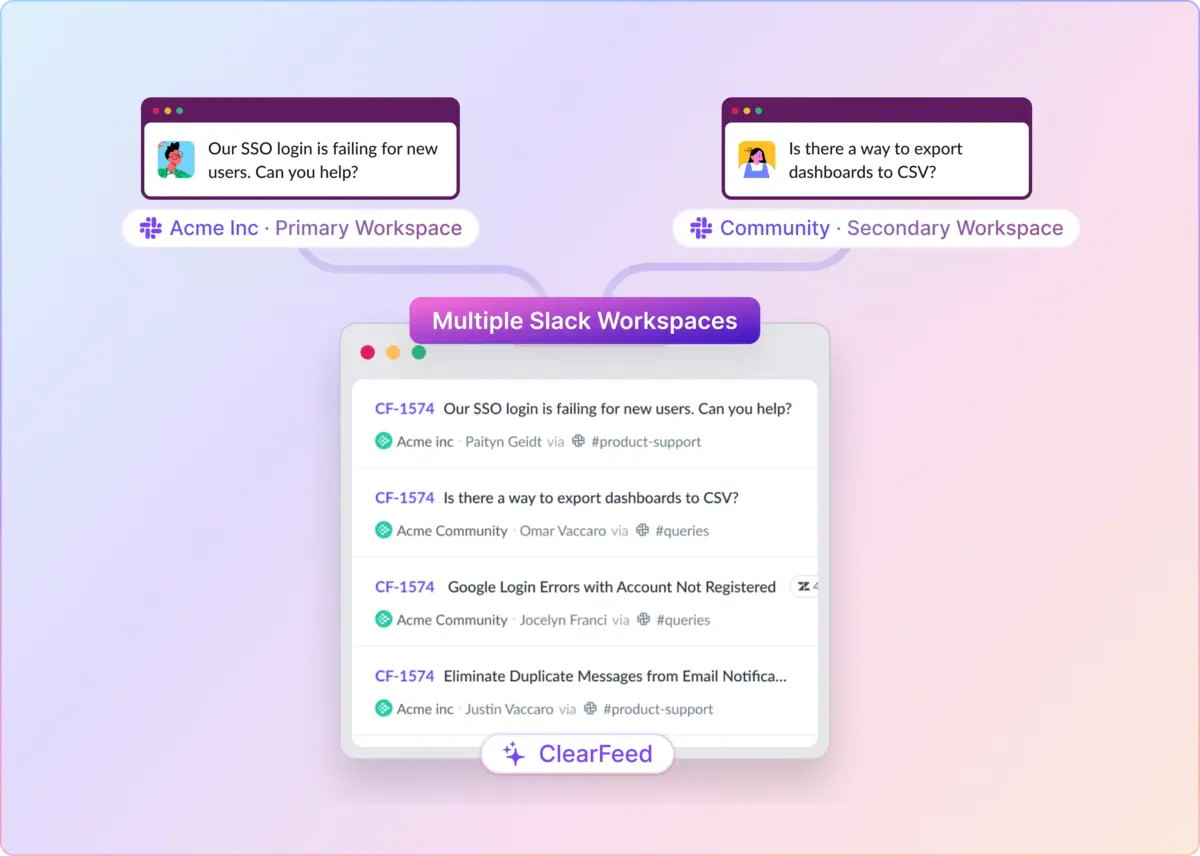
A chat bubble appears on your website. When a visitor sends a message, it goes to a Slack channel. Your team replies from Slack, and the response appears in the widget for the visitor. You get two-way live chat without giving your team another inbox to manage.
This is often what B2B teams have in mind when they search for “Slack chat on website,” “integrate Slack into website,” or “embed Slack chat into website.” It’s also the setup covered in this guide.
Choose Option 1 if you want to publish Slack conversations for anyone to read. If you want visitors to message your team and receive replies, keep reading.
Why Route Website Chat Into Slack
The usual live chat setup gives your support team yet another inbox — another tool to monitor, another set of notifications to triage, another place context goes to die. For teams that already live in Slack, that's a step backward.
Routing website chat into Slack flips the model:
- No new inbox. Your agents stay in the tool they already use all day. Website messages appear as Slack threads in a triage channel.
- Context stays with the channel. Customer message, internal discussion ("who owns this?"), and the reply all live in the same thread.
- Faster response time. No tab-switching. The Slack live chat integration turns your existing workflow into a chat workflow, not the other way around.
- Works alongside your other channels. Slack Connect customer channels, email tickets, and Microsoft Teams conversations all land in the same triage system. If you're trying to integrate Slack into your website as one of several contact paths, this gives you one place for all of them.
- Private collaboration without leaving the thread. Internal-only comments (via the 🔒 emoji) let your team coordinate without the customer seeing anything.
In short: a website chat Slack integration should turn chat into structured support work inside Slack — not just forward a notification and ping-pong you back to another tab.
How To Set Up ClearFeed's Slack Chat Widget on Your Website?
This guide assumes you already have a ClearFeed account. If not, head to web.clearfeed.app and sign up. When prompted, select External Helpdesk as your use case (since we’ll be working with customers), connect your Slack workspace, and skip adding integrations for now to keep things simple.
Step 1: Enable Web Widget on Your Website
First, enable the Web Chat channel in the ClearFeed dashboard. This tells ClearFeed, “I want to accept conversations from outside Slack, but handle them inside Slack.” Go to Settings → Chat Setup, then enable the Chat Widget.
Note: Email setup is required to enable the Web Chat channel. Make sure you’ve completed your email setup before proceeding.
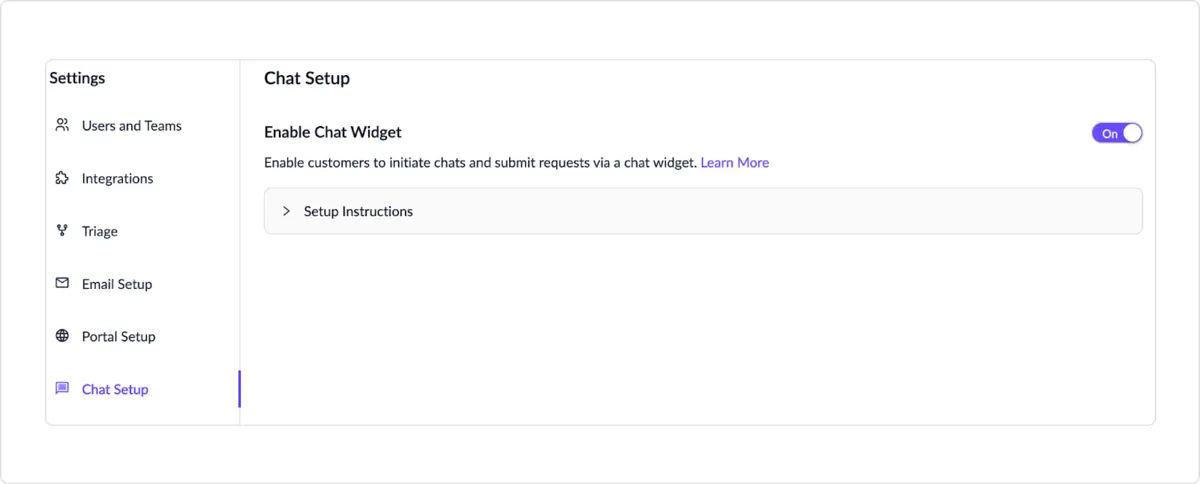
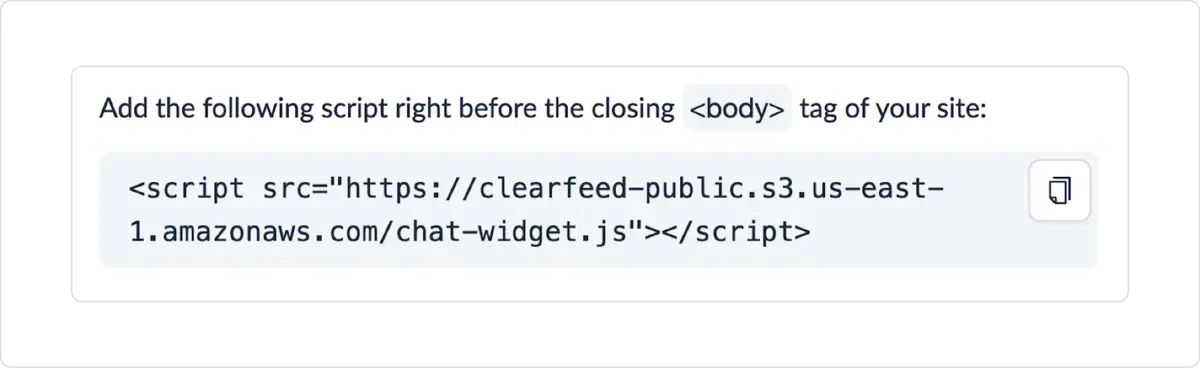
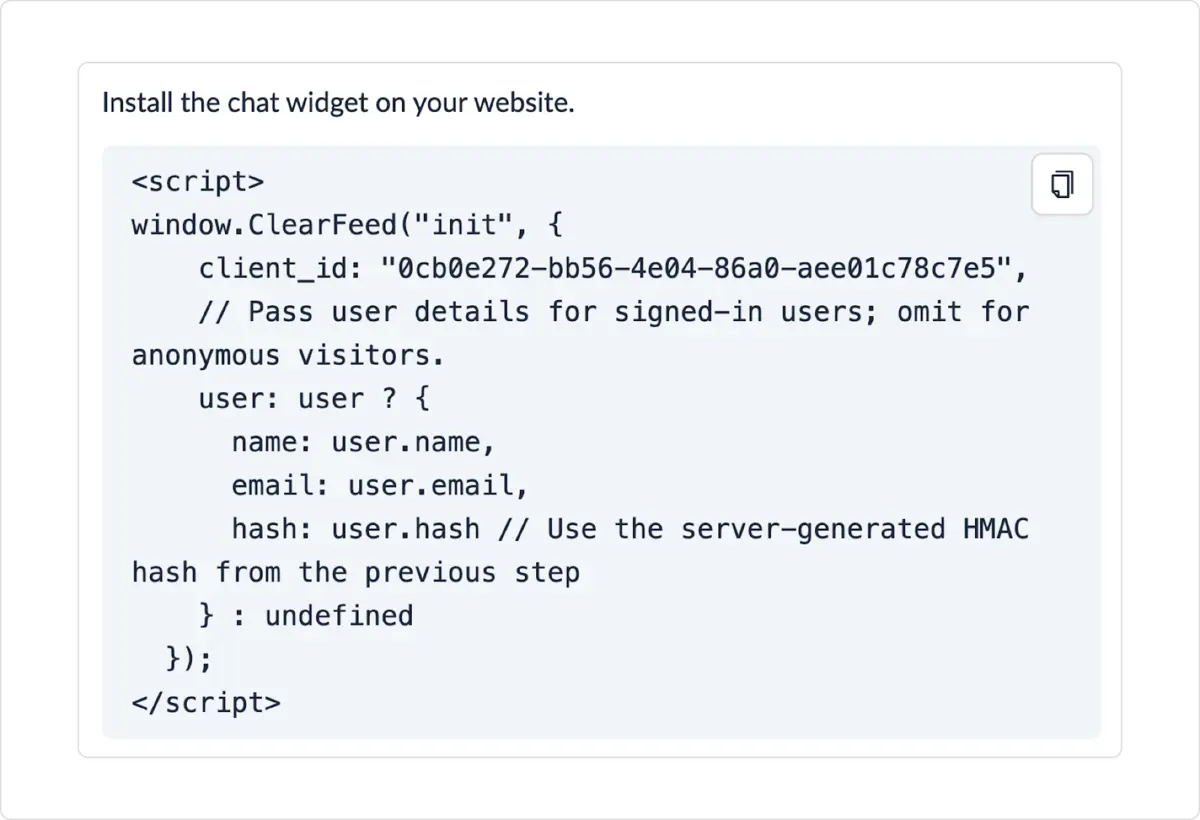
Once you’re done, you’ll need to add a small script to the body of your website. It looks like this:
Step 2: Generate and Secure Your Access Credentials
When you enable Web Chat, ClearFeed provides a Client ID and Client Secret. Use the Client Secret on your server to generate a userHash from the logged-in user’s email. Pass this userHash to your browser client to initialize ClearFeed’s web chat widget.
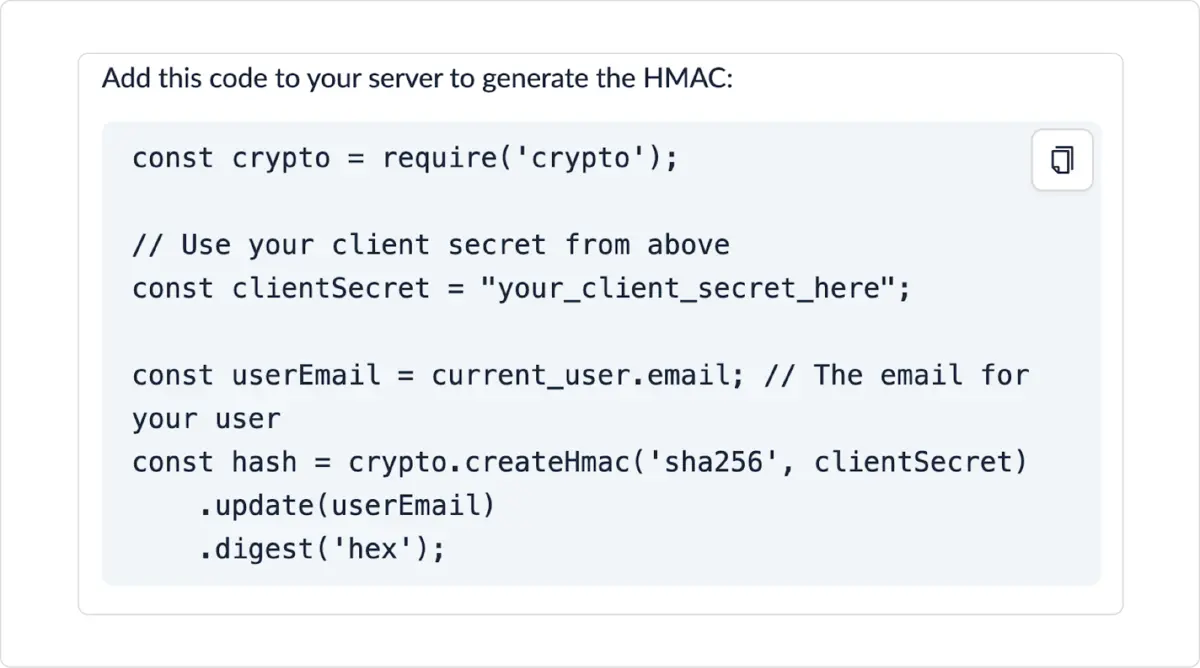
This ensures that your chat widget is securely linked to your account, so every conversation flows directly into your support channels, and no one can impersonate your website.
Step 3: Deploy and Test the Web Widget on Your Website
Add a small <script> snippet to your website to turn it into an active support channel.
Step 4: Create a Slack Triage Channel for Incoming Requests
Once you embed the live widget on your website, a Web Chat collection will automatically be created. Go to Inbox → Collection. You can see a collection of Web Chat, as shown below:
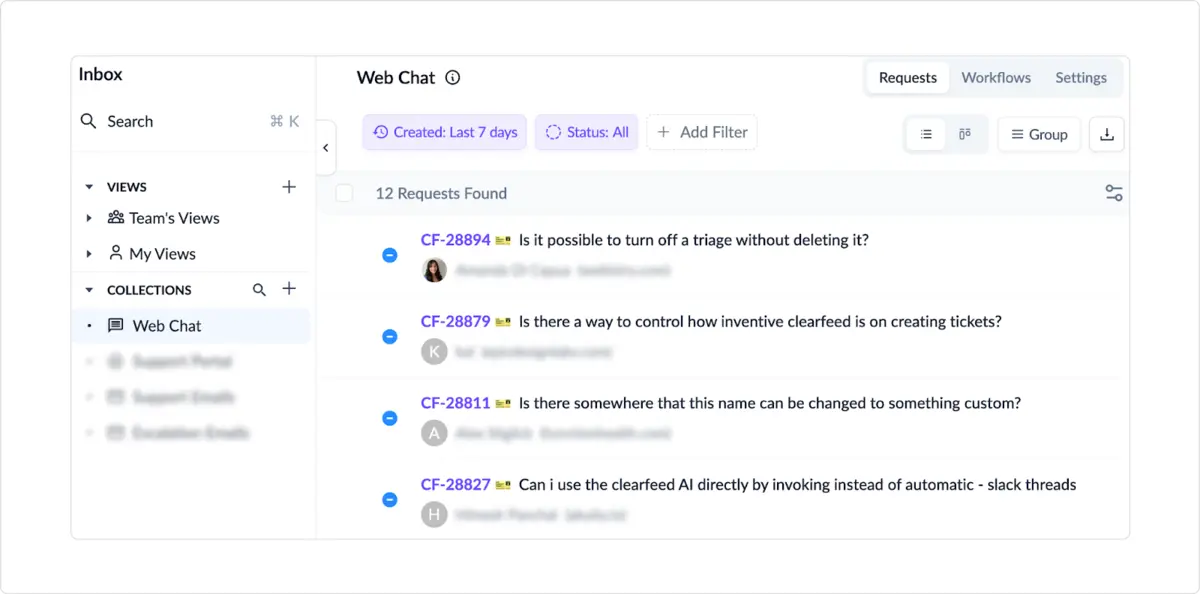
Now, to start forwarding customers’ requests/queries from your web widget to Slack, go to Settings (located in the top-right corner) and scroll down to Triage Channel. Select the Slack channel that should receive these tickets.
Step 5: Chat With Website Visitors Directly From Slack
Once your widget is connected to ClearFeed, all customer messages will be routed to the triage channel in Slack.
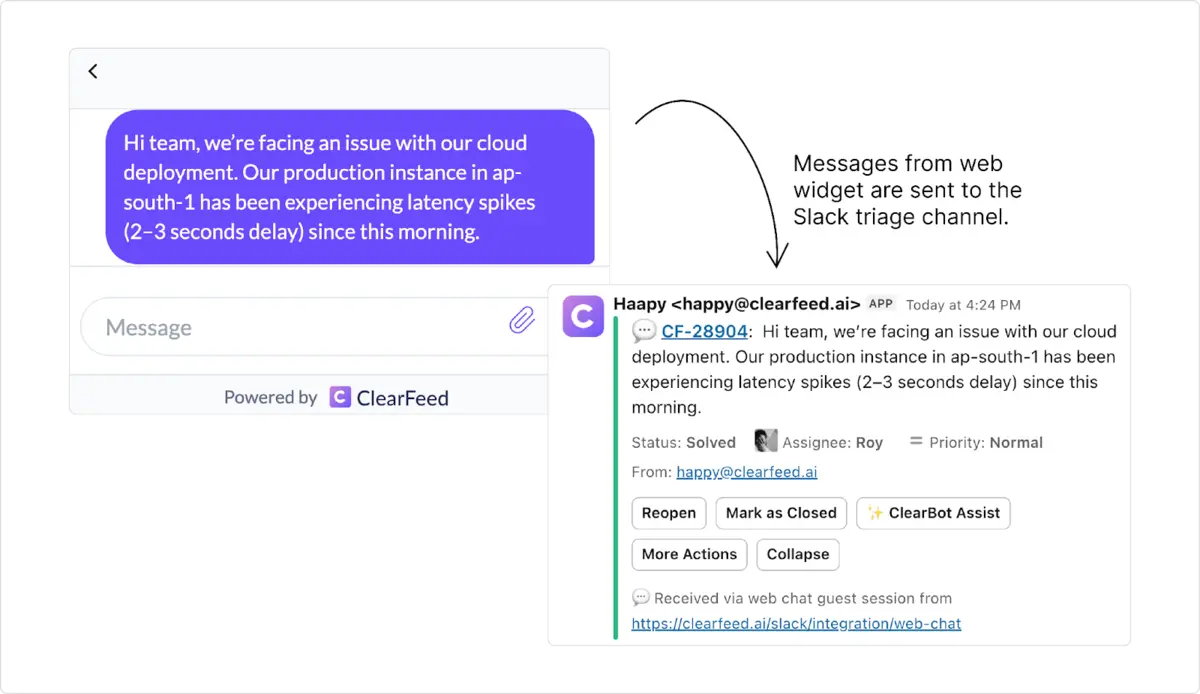
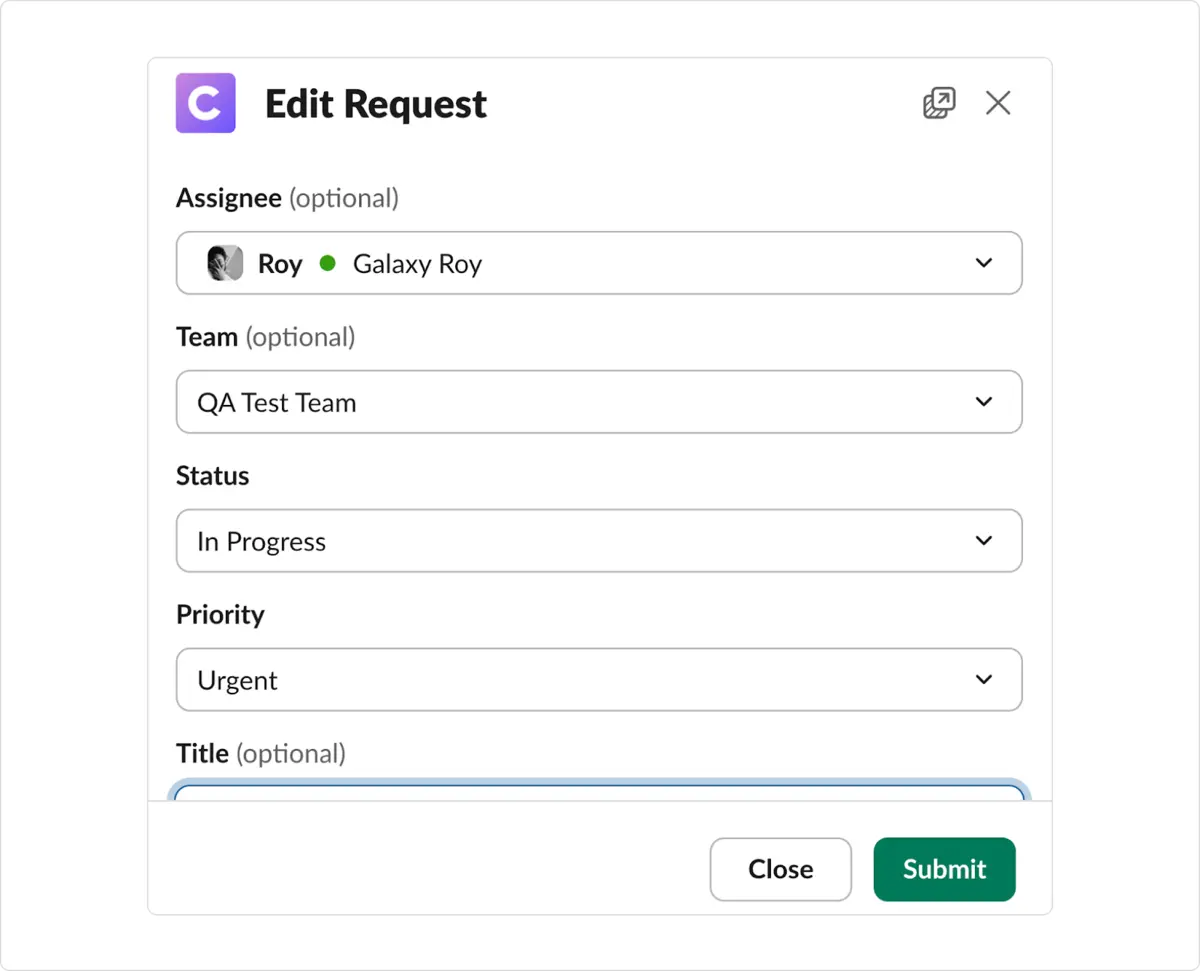
You can assign the ticket to yourself or to a teammate, change the ticket status, and add more details right from Slack.
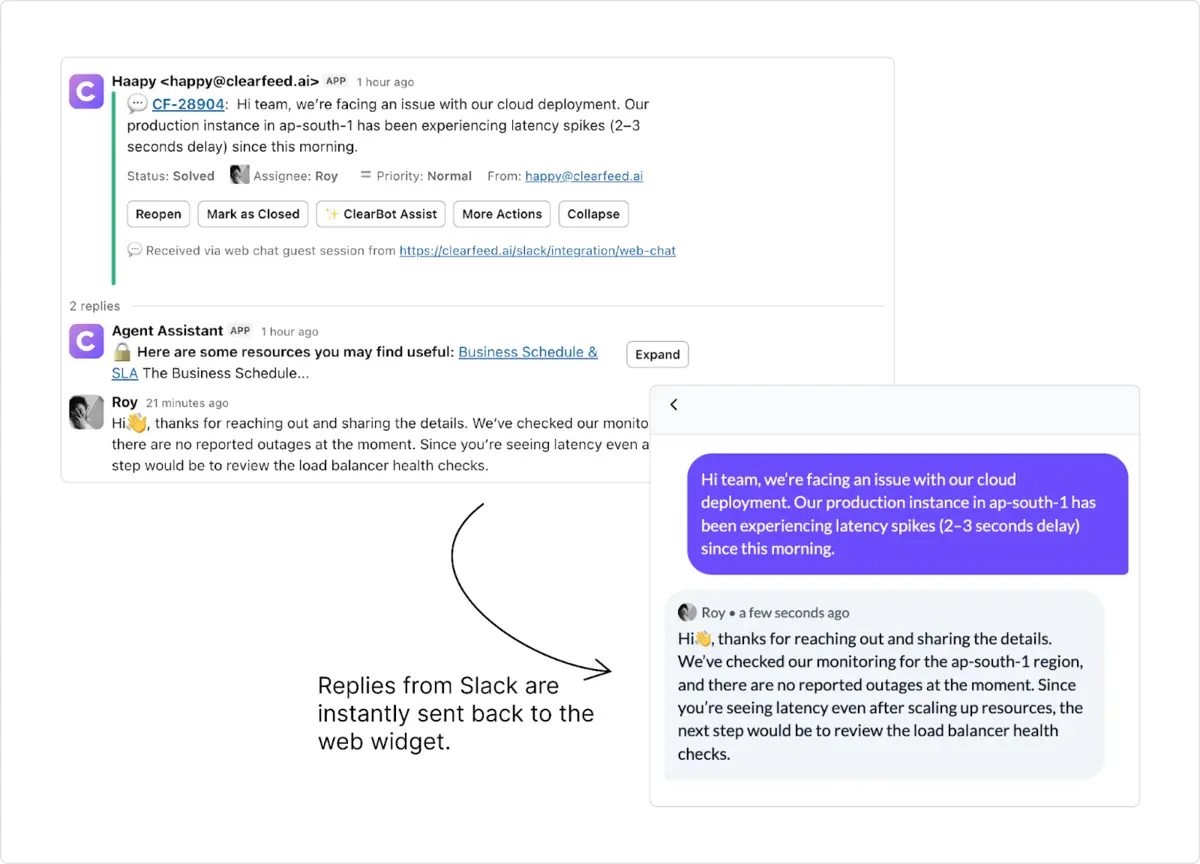
To respond, simply reply in the Slack thread under the request. Your reply is instantly sent back to the visitor via the web chat widget on your website. Customers see your response in real time, while your team works entirely from Slack.
Sidenote: If the customer goes offline, ClearFeed automatically delivers your response to their email address, ensuring they still receive the reply even when they’re not active on the web chat.
Step 6: Collaborate Privately With Teammates Inside Slack
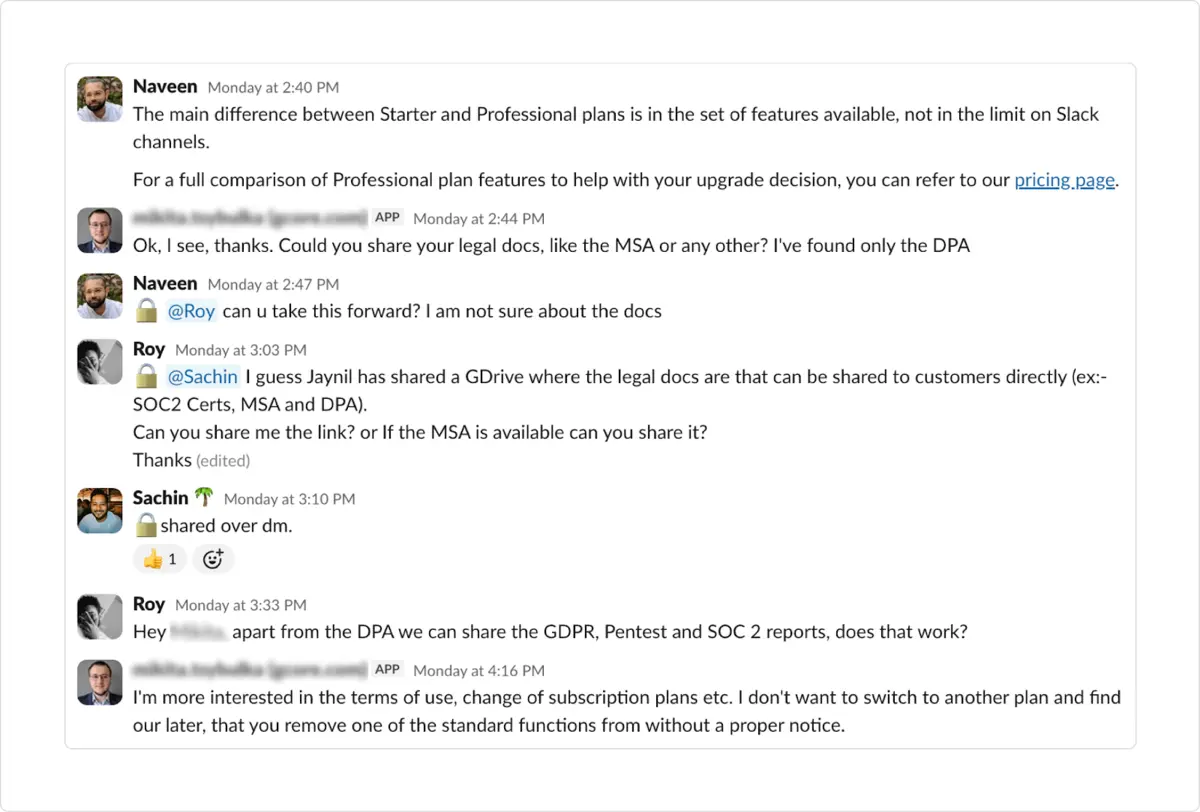
If you need to coordinate internally, you can leave a private comment in the triage thread. Use them to add context, leave handover notes, or discuss next steps with teammates without exposing the conversation externally.
To initiate a private conversation, go to the Slack thread associated with the request in your triage channel. Start your message with the 🔒 lock emoji (e.g., 🔒Checking with the product team on this).
Post your comment. ClearFeed will mark it as private, meaning it stays inside Slack and is not shared with the visitor through the web chat widget.
Manage Web Chat Requests in Slack With ClearFeed
Rolling out web chat is the easy part. What matters is how your support team uses it.
In B2B, speed is table stakes. The real value comes from pairing fast responses with deep expertise. Every chat is an opportunity to resolve issues, identify patterns, coach teammates, and strengthen relationships with the accounts that matter most. By bringing customer chats into Slack, ClearFeed allows a different level of speed and collaboration for service teams.
On top of that, ClearFeed does more than just web chat. It also works with Slack Connect, Email, and other messaging tools. This lets you bring all your customer conversations into a single spot. You get tools to track performance goals, send alerts before issues grow, and automate answering common questions. This makes your support team faster, more dependable, and reduces repetitive work.
Beyond the Widget: Unifying Website Chat, Slack Connect, Email, and Teams
A Slack chat widget solves one contact path: website visitors. But most B2B support teams juggle several — customers emailing support@, customers already chatting in a shared Slack Connect channel, teams running on Microsoft Teams, and tickets coming in from a customer portal.
ClearFeed routes all of those into the same triage flow your Slack widget uses. One channel-based support model, one inbox, one set of SLAs and automations. If you've been patching this together — a widget vendor here, a shared inbox there, a Slack Connect manager somewhere else — the unified setup usually replaces three or four tools at once.
Frequently Asked Questions
Can you embed Slack into a website?
You can’t embed a Slack workspace directly into a webpage using an official Slack feature. If you want to publish conversations from a public Slack community, tools like Linen or Slash can turn them into a public web feed.
If you want website visitors to chat with your team, use a Slack-connected chat widget instead. ClearFeed’s Slack chat widget sends visitor messages to Slack, where your team can reply. Their responses then appear in the widget. See the setup guide above.
What's the difference between embedding Slack and integrating Slack chat into a website?
Embedding Slack usually means publishing conversations from a Slack community on a webpage for visitors to read. Integrating Slack chat means adding a website widget that sends visitor messages to Slack and displays your team’s replies back in the widget.
For B2B teams that want to talk with website visitors, the second setup is usually the relevant one. That’s what this guide covers.
Can I get Slack notifications when someone fills a form on my website?
A webhook or Zapier can send a Slack alert whenever someone submits a form. That works well for one-way notifications.
For an ongoing conversation, use a chat widget like ClearFeed. It creates a thread in Slack, tracks the conversation history and owner, and sends your team’s replies back to the visitor.
Does this work for Microsoft Teams too?
Yes. ClearFeed routes the same website chat into Microsoft Teams channels if your team uses Teams instead of (or alongside) Slack.
How is this different from Slack Connect?
Slack Connect works when your customer also uses Slack and joins a shared channel with your team. The chat widget is for website visitors, who only see a chat bubble and don’t need a Slack account.
ClearFeed brings conversations from both sources into the same triage flow. See our guide to managing support across channels.
Want a 15-minute walkthrough of the widget + the unified Slack inbox? Book a demo or start a 14-day trial.