Table of Contents

Support work sprawls. A conversation starts in Slack. Someone asks for help. A few people reply. You've got a thread with maybe half an answer—and a ticketing system that doesn't know any of this happened.
The Slack-Freshdesk integration connects the two. Your team talks in Slack. The ticket lives in Freshdesk. You don't copy and paste the same info twice, and requests don't vanish into the void.
This guide covers what the native integration actually does and where it breaks down. I'll walk through the stuff people hit in practice: keeping Slack threads connected to tickets, getting updates into the right channels, setting up rules so not every "hey quick question" turns into a formal ticket.
TL;DR
Freshdesk’s native Slack integration is useful for ticket updates and quick actions, but Slack-first support teams need ClearFeed for deeper sync, SLA visibility, and thread-level workflows.
The gist
- Freshdesk integrates with Slack through its Marketplace app, requiring Freshdesk admin access and API-enabled paid plan.
- Native features include ticket creation, ticket updates, Slack notifications, agent DMs, slash commands, and internal collaboration.
- Setup issues usually come from wrong workspace installs, expired authorization, missing channel access, or disabled DMs/slash commands.
- Native limits include a 40-channel cap, rigid channel mapping, no Slack SLA breach alerts, and agent-seat cost pressure.
- ClearFeed adds two-way message and status sync, full-thread ticket creation from Slack, automatic ticketing, private-note sync in both directions, form-driven intake, emoji-based ticket actions, and AI summaries and answers grounded in your Freshdesk knowledge base.
Worth knowing: Best fit depends on scale: native Freshdesk-Slack works for basic alerts, while ClearFeed is positioned for running Slack-based support workflows at volume.
Does Freshdesk Integrate With Slack?
Yes. Freshdesk has a Slack app. Your support team can see ticket updates in Slack without switching tabs.
The integration sends ticket notifications to Slack channels. When someone creates, updates, assigns, or resolves a ticket in Freshdesk, your team sees it. This helps when support needs engineering, product, or ops to look at something — people can see what's happening without opening Freshdesk.
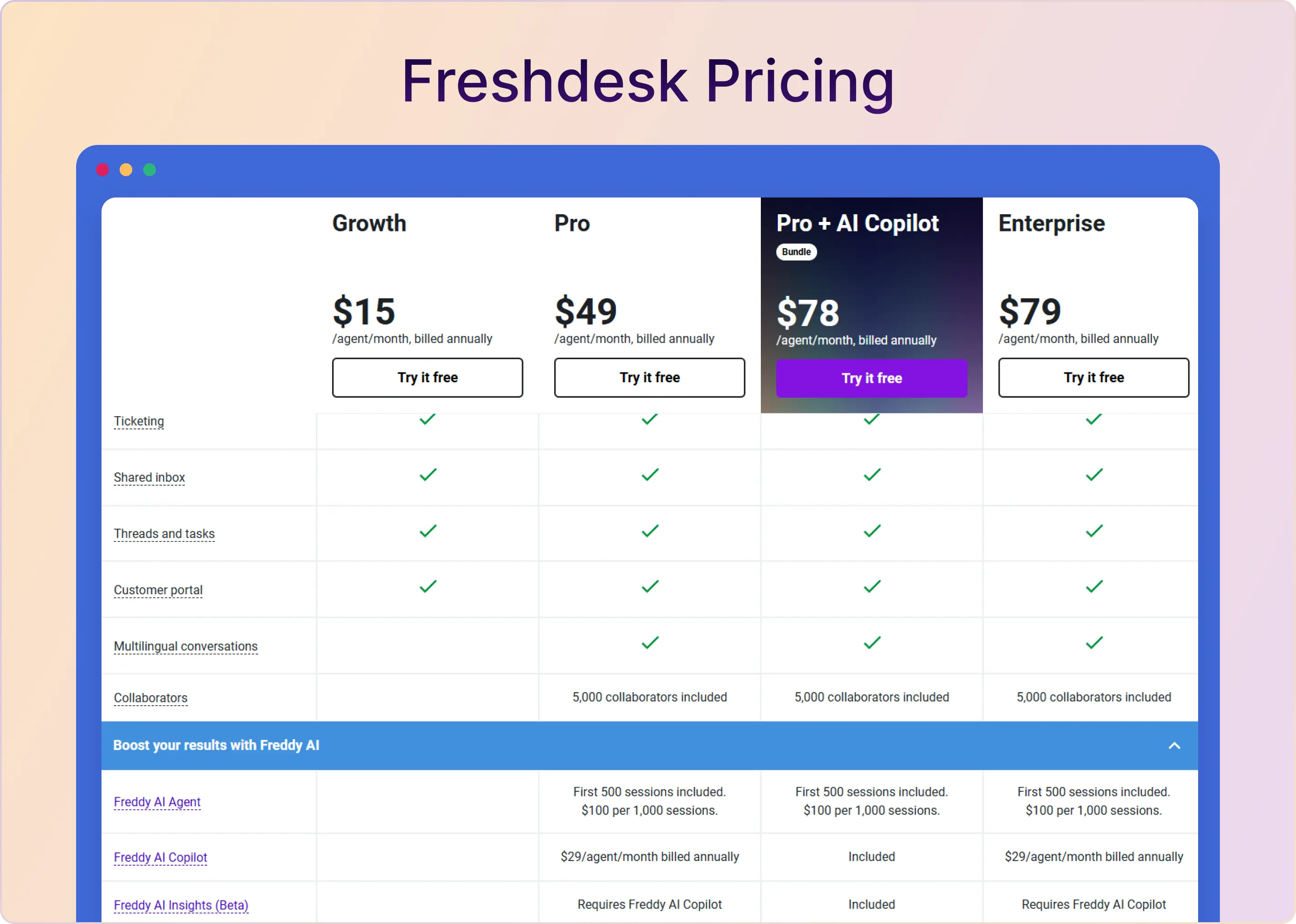
You need admin access in Freshdesk and a paid plan with API access. That's where most teams get stuck during setup.
How To Integrate Slack With Freshdesk
Setting up Slack integration with Freshdesk is pretty straightforward once you have the right permissions. Here’s the clean path most teams follow to get the native Freshdesk Slack integration running:
- In Freshdesk, open the Marketplace (you’ll find it in the top navigation). Then search for Slack and choose the Slack app.
- Install the app for your Slack workspace and continue to the configuration screen. You’ll need admin access in Freshdesk for this step.
- Choose which Slack channels Freshdesk should be allowed to access. This matters more than people expect because it affects where ticket updates appear and what you can do later with automation rules. (Freshdesk allows adding a limited set of public and private channels.)
- If you want agents to receive ticket updates as direct messages, enable “Allow DM to agent.” If you want ticket actions from Slack, enable “Allow slash command,” then save your configuration.
Key Features of the Native Freshdesk-Slack Integration
The native Freshdesk Slack integration is designed to keep ticket updates and quick actions close to where your team already talks. Here are the most useful parts of the built-in Slack Freshdesk integration and how they look in day-to-day support.
1. Create and Update Freshdesk Tickets From Slack Messages
If a Slack conversation turns into something that needs proper tracking, you can convert a message into a Freshdesk ticket using slash commands. Once the ticket exists, changes like status, priority, assignee, or notes can trigger real-time notifications back to the same Slack channel, keeping the thread aligned with what’s happening in the helpdesk. Agents can also receive direct messages in Slack when tickets get assigned to them, which helps reduce “who’s owning this?” confusion.
2. Collaborate With Internal Team Members Inside Slack
When support needs help from engineering or another internal team, the integration can surface a “Collaborate” action on ticket notifications so more teammates can join in without bouncing between tools. In many setups, internal collaborators can discuss a request and leave private comments, even inside a Slack message or thread, and have those replies synced back to Freshdesk. This is the part that makes the integration feel like a workflow, not just notifications.
3. Use Automation Rules To Reduce Manual Follow-Ups
The integration also supports automated workflows that help tickets move forward without someone babysitting every step. Typical automation includes assigning tickets to the right agents, setting ticket properties such as status and priority, and triggering email alerts when specific conditions are met. If your support motion relies on consistent routing and escalation, this is where you’ll spend most of your configuration time.
Why Your Freshdesk Slack Integration Might Not Be Working
When Slack Freshdesk integration breaks, it usually isn’t “a bug.” It’s almost always one of a few setup or permission snags that quietly block updates from flowing between Slack and Freshdesk.
- The app isn’t installed in the right place: Make sure the Freshdesk app is installed for the correct Slack workspace and that it was installed by an admin account in Freshdesk. A surprisingly common failure mode is thinking it’s installed because someone added “something Freshdesk-ish” in Slack, but the real Slack integration with Freshdesk never got connected end-to-end.
- Authorization expired or never completed: Even if the app is installed, Slack still needs explicit permission to talk to Freshdesk. Re-check the authorization step inside Freshdesk (usually under profile or app settings) and re-authorize Slack if needed. If your workspace has strict Slack admin controls, the app may be partially installed but not fully approved, which may appear as “nothing happens” on the agent’s side.
- Channel and access configuration is off: If you don’t select the correct Slack channels during setup, ticket updates won’t land where your team expects them. For private channels, the app also needs access, and archived channels can cause confusing behavior because updates have nowhere valid to post. If someone’s trying to use Slack threads as the “source of truth,” this is also where things fall apart, because the update might go to a channel but not the exact thread people are watching.
- Features are toggled off (DMs and slash commands): If you expect agents to receive ticket updates via DM, “Allow DM to agent” must be enabled. If you want to create or manage tickets from Slack, slash commands must also be enabled. Without those switches turned on, the Freshdesk Slack integration will feel limited even when it’s technically “working.”
Once you’ve fixed the above, do a quick sanity test: create a ticket from a Slack message, update its status in Freshdesk, and confirm that the update appears in the intended Slack channel. That one loop catches most issues immediately.
What’s Missing From Native Freshdesk-Slack Integration
The native Slack Freshdesk integration is genuinely useful for getting ticket activity into Slack and speeding up internal coordination. But once your support motion gets busy, a few limitations show up pretty quickly.
- Channel limits and rigid mapping: There’s a cap on the number of customer channels you can add (up to 40 total, split between public and private). And if you want multiple Slack channels feeding into one Freshdesk group, the native Slack integration with Freshdesk doesn’t support that mapping, which can make monitoring and routing harder when your channels are organized by customer, region, or product line.
- No SLA breach notifications inside Slack: If you’re expecting Slack to alert the team when you’re about to miss an SLA, the native Freshdesk Slack integration won’t do that. SLA tracking remains primarily a supervisor's responsibility, which can be fine for smaller teams but becomes risky as volume increases or you have multiple queues to monitor.
- Agent-based pricing can get expensive, fast: As you add more support agents, costs rise because each agent is another paid seat. The bigger issue is what it does to collaboration: if only a subset of the team has access to Freshdesk due to seat costs, the rest of the org ends up “outside” the system, even though they could help unblock tickets faster.
If your team runs support primarily in Slack threads, it’s worth pressure-testing whether the native setup aligns with your actual workflow, especially around how updates are surfaced, who sees what, and how consistently ticket context stays tied to the same conversation.
Introducing ClearFeed’s Slack Freshdesk Integration
If you like the idea of Freshdesk Slack integration but the native setup feels a bit too lightweight as your team grows, ClearFeed is the layer that helps you run the workflow in Slack while keeping Freshdesk as the system of record.
Here's what it adds on top of a standard Slack integration with Freshdesk:
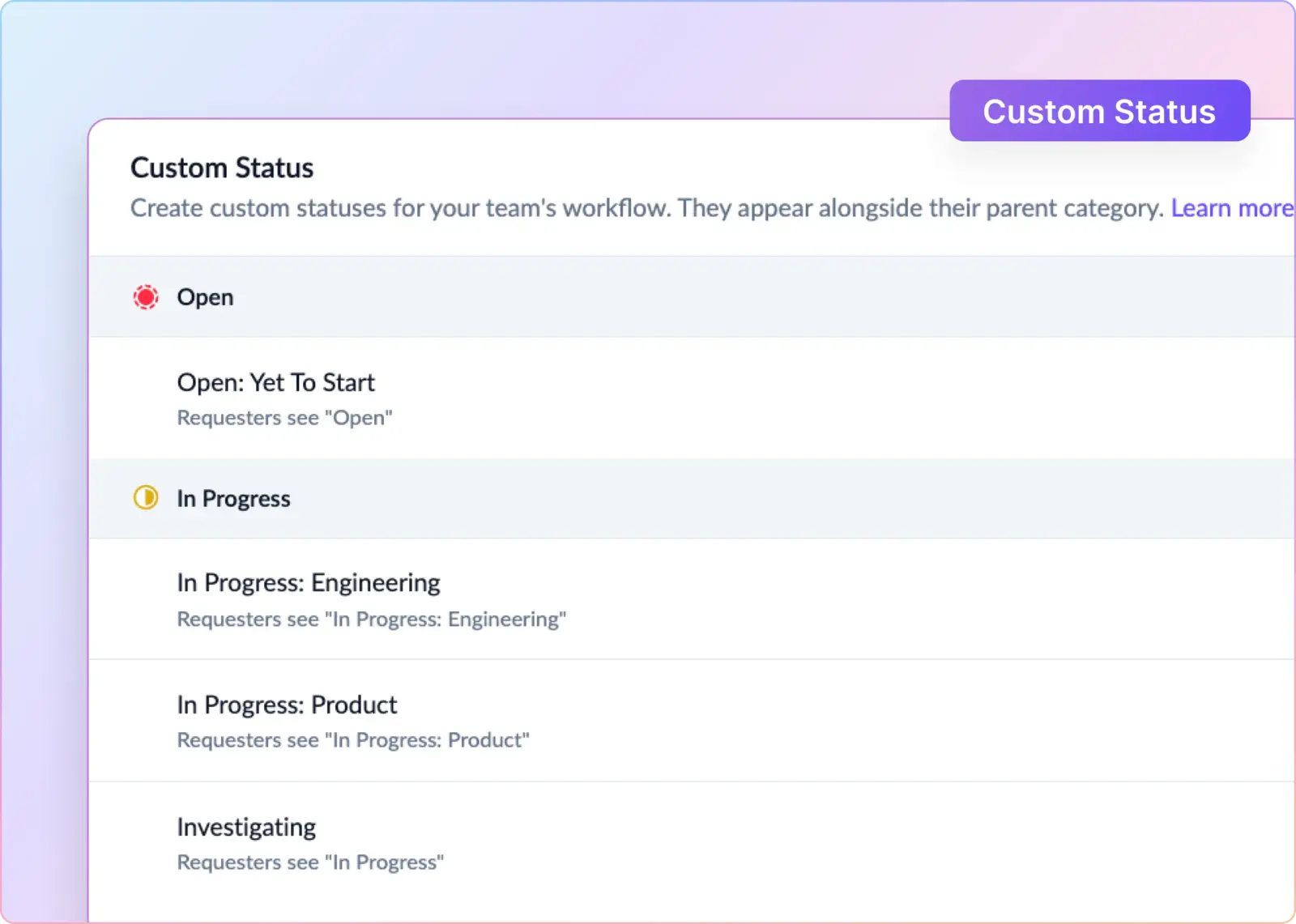
- Live two-way sync between Freshdesk and Slack threads: Replies, comments, and status changes stay in sync between the Freshdesk ticket and the Slack conversation. Each ticket can be set to full two-way sync, Slack-to-Freshdesk only, Freshdesk-to-Slack only, or no message sync at all — globally or per individual ticket. Status sync for the Solved and Reopened transitions can be enabled or disabled independently, and Freshdesk custom statuses are surfaced in Slack.
- Single-click ticket creation from an entire thread: Turn a full Slack thread — messages and attachments — into a Freshdesk ticket in one action, with an AI-generated summary appended to the ticket description if enabled. Alongside emoji-based ticket creation, users can also file tickets from the
/cf-fileshortcut, the Message Bar in a monitored channel, or the More Actions menu in the Triage Channel. - Automatic ticketing for customer messages: Turn on Automatic mode and every new customer thread in a monitored channel becomes a Freshdesk ticket without waiting for someone to react. Forms mapped to a Collection control how tickets are created — with hidden fields, default values, and a requester-email prompt with per-user "remember" or a configured default email as fallback.
- Edit tickets from Slack, with the fields Freshdesk currently supports: From the Triage Channel, agents can update ticket fields exposed by the Edit form and mark tickets as solved. ClearFeed currently supports Priority and Source as configurable Freshdesk fields, in addition to the standard Subject, Description, and Contact Email, and the customer-facing ticket block can show or hide Title, Status, Form Name, and Ticket URL. Assignment lives in Slack via emoji reactions rather than a Freshdesk assignee picker.
- Private collaboration synced as Freshdesk Private Notes: Internal Slack discussion in the Triage Channel syncs to Freshdesk as Private Notes, and Private Notes from Freshdesk can be routed back into the Triage Channel so agents see the internal thread on both sides. Public replies from Triage sync to the Freshdesk ticket as regular comments, keeping the customer-facing thread cleanly separated from the internal one.
- Slack-native actions for assignment and resolution: Reacting with 👀 assigns the Freshdesk ticket to the responder, and reacting with ✅ moves it to Resolved. Priority-based ticket creation using different emojis (low, medium, high) is available on request from ClearFeed Support.
- Private ticket creation for sensitive requests: Route DMs and shortcut-triggered requests into Freshdesk without posting a visible request-channel message. This flow uses a DM Collection, which is available on the Internal Helpdesk and Integrations product editions.
- Reverse Freshdesk flow: Tickets that originate in Freshdesk from email, the Help Center, or chat can be surfaced in a monitored Slack channel via a Slack Workflow webhook and a Freshdesk automation rule. Once in Slack, agents can reply, sync comments both ways, and edit ticket properties from the Triage Channel.
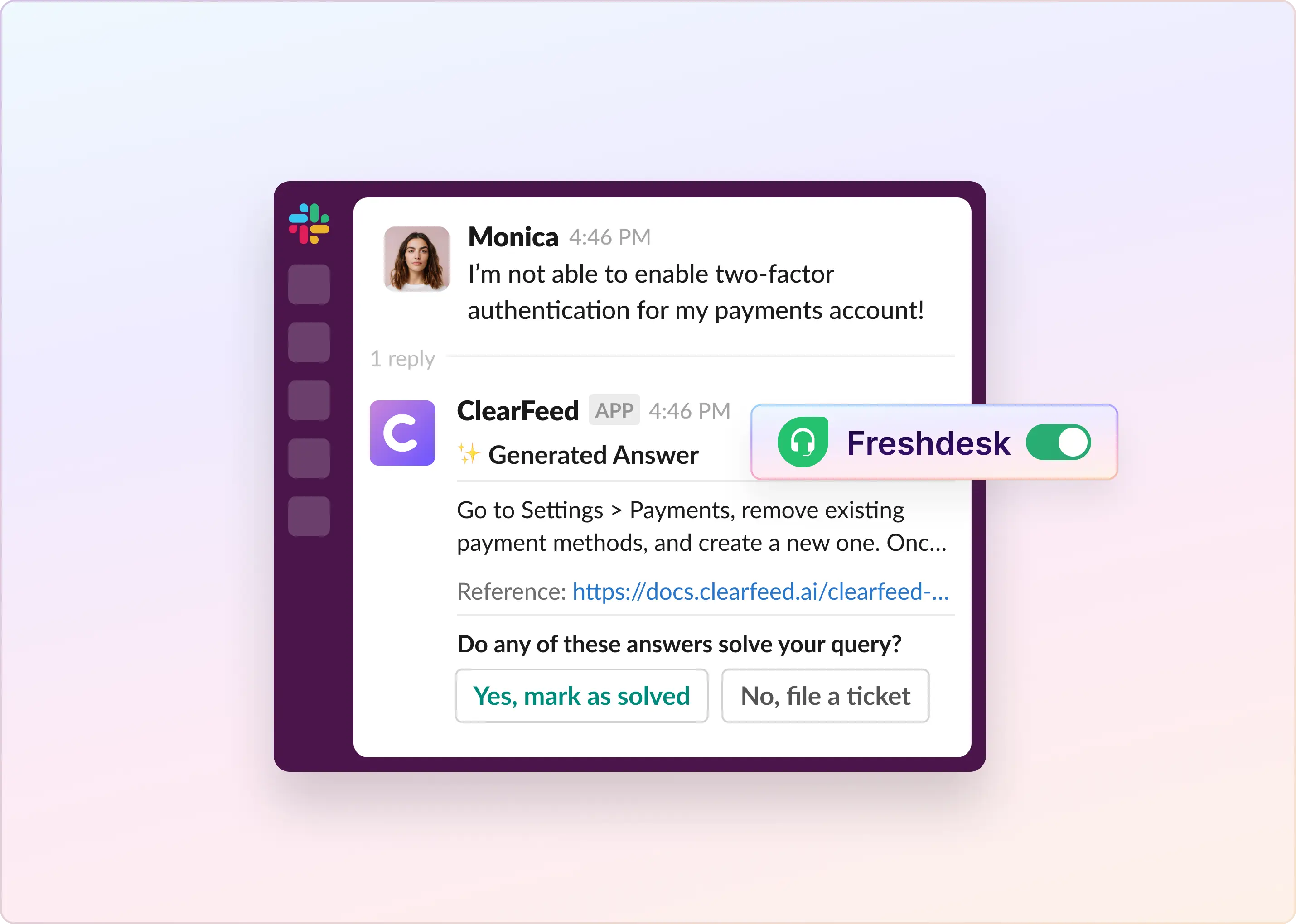
- AI summaries and Freshdesk knowledge: New Freshdesk tickets can include an AI-generated summary of the Slack thread in the description. Freshdesk knowledge base articles can also be indexed as a ClearFeed Knowledge Source (requires a paid Freshdesk plan with API access) and used by AI Agents to answer repeat questions in Slack before a ticket is filed.
How To Integrate Slack and Freshdesk Using ClearFeed?
If you want a more complete Slack-Freshdesk integration than the native app offers, ClearFeed connects your Freshdesk account to Slack and keeps ticket work tied to the right Slack threads.
- Create a ClearFeed account and sign in.
- In the ClearFeed web app, open Settings, then go to Integrations and connect your Freshdesk account with your Slack workspace.
- Enter your Freshdesk subdomain and API key to complete setup. The integration must be authorized by a Freshdesk admin, and the same email address should exist in Freshdesk and Slack. Once connected, you can enable Freshdesk as the ticketing integration on a Collection and start filing tickets right away.
If you want a concrete example of this working day-to-day, ScanPay shared how they collaborated across Slack and Freshdesk (and what changed once ticket context stopped getting lost).
Automate Customer Support With Slack and Freshdesk
A good Slack Freshdesk integration does one thing well: it ensures a support request doesn’t die in a Slack conversation. The moment something needs ownership, tracking, or accountability, it should become a ticket, and the updates should flow back to where the conversation is actually happening.
If your team mostly needs ticket alerts in Slack and an easy way to loop in teammates, the native Freshdesk Slack integration can be enough. But if you’re trying to run Slack-based support at scale, especially across multiple channels and ongoing Slack threads, you’ll want tighter control over how tickets get created, routed, and kept in sync. That’s usually the difference between “we connected Slack to Freshdesk” and “this actually runs our workflow.”