Table of Contents

Freshdesk pricing looks simple at first: pick a plan, multiply it by the number of agents, and you have a monthly number.
That is only the starting point.
The real Freshdesk bill depends on which product track you choose, how many agents need paid seats, whether you need omnichannel support, which AI features you turn on, and whether the features you expected are locked behind a higher tier.
As of May 8, 2026, Freshworks lists two main Freshdesk pricing paths for support teams:
- Freshdesk Email and Ticketing: for teams that mainly need helpdesk ticketing, email support, knowledge base, automation, reporting, and portals
- Freshdesk Omni: for teams that want Freshdesk plus broader omnichannel support across channels such as chat, messaging, social, and email in a unified workspace
This matters because many "Freshdesk pricing" searches compare the lowest Freshdesk plan against tools that include different channels, AI workflows, or Slack-based support by default. A fair comparison starts by matching the workflow, not the logo.
Freshdesk Pricing Overview
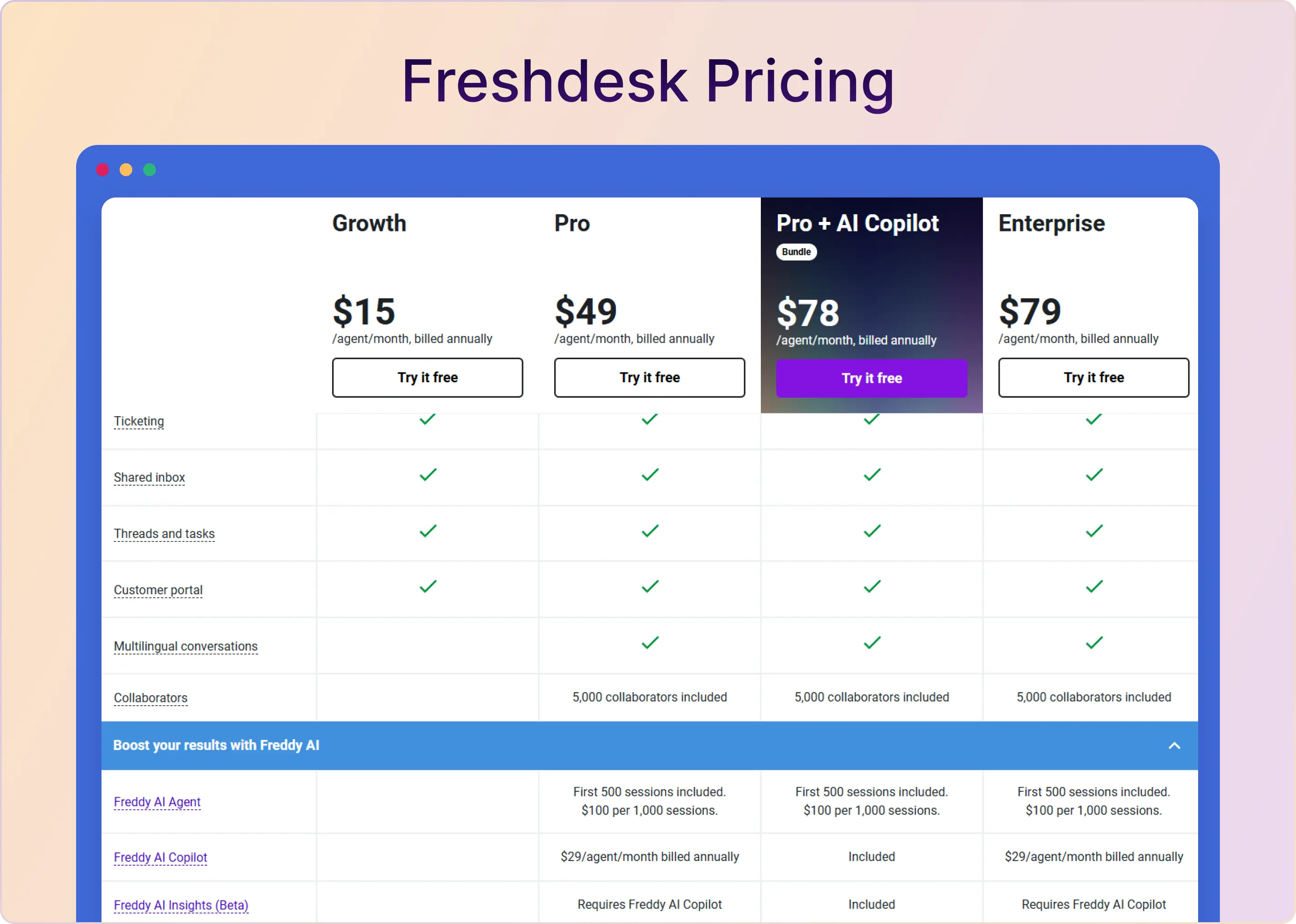
Freshworks currently shows Freshdesk Email and Ticketing plans at the following annual-billing prices:
Freshdesk Omni is priced separately:
Freshworks also offers a 14-day free trial that includes access to the Enterprise plan. According to its pricing FAQ, after the trial, you must choose a plan and pay to continue; otherwise, the account is suspended.
The takeaway: Freshdesk can be a reasonable entry point for email-first ticketing, but the plan you actually need may not be the entry plan.
What Drives the Real Freshdesk Bill?
Most teams do not outgrow Freshdesk because the base plan is impossible to understand. They outgrow it because the support workflow becomes more complex than the starter plan.
The cost usually moves for five reasons.
1. Agent seats multiply quickly
Freshdesk is agent-priced. If 5 agents use Growth, the base annual-billing price is:
5 agents x $19 = $95/month
If that same team needs Pro:
5 agents x $55 = $275/month
At 20 agents, the same jump becomes:
20 agents x $19 = $380/month
20 agents x $55 = $1,100/month
This is not a Freshdesk-specific issue. Most helpdesks are priced by agent. But it does mean your bill grows with every person who needs to work inside the system, not only with ticket volume.
2. Freshdesk and Freshdesk Omni are different buying decisions
The biggest pricing fork is not Growth vs Pro. It is Freshdesk Email and Ticketing vs Freshdesk Omni.
If your team only needs email ticketing, a support portal, basic reporting, automations, and a knowledge base, standard Freshdesk may be enough.
If your support operation includes live chat, messaging, social channels, SMS, or a more unified command center experience, Freshdesk Omni is the closer fit. That starts at $29 per agent/month on annual billing, not $19.
For 10 agents, the entry difference is:
That extra $100/month may be sensible if Omni matches your channel mix. The problem starts when buyers compare only the $19 number and later realize their real workflow belongs in Omni.
3. Freddy AI changes the math
Freshworks now separates several AI capabilities under Freddy AI.
The important pricing pieces are:
- Freddy AI Copilot is listed in Freshworks support documentation as a flexi-add-on, starting at $29 per agent/month on annual billing or $35 per agent/month. It can be purchased for a subset of agents.
- Freddy AI Agent is session-based. Freshdesk's pricing page lists the first 500 sessions as included and shows $49 per 100 sessions after that. Freshworks also explains that a session is a unique end-user interaction with an AI agent, and for email AI agents, each response counts as a session.
- Freshworks documentation states that the 500-session allowance is limited to 1 per account. The plan-level eligibility language varies across Freshdesk and Freshdesk Omni help/pricing pages, so buyers should confirm eligibility in checkout or with sales.
This is where the "starting at" Freshdesk price can stop being useful. A 15-agent team on Freshdesk Pro with AI Copilot for 10 agents would be:
15 Pro seats x $55 = $825/month
10 Copilot add-ons x $29 = $290/month
Base plus Copilot = $1,115/month
That does not include any extra Freddy AI Agent sessions beyond the included allowance.
AI can still be worth it. But it should be forecast as a separate line item, not mentally included in the plan price.
4. Feature gates can force tier upgrades
Reviewers generally separate Freshdesk's day-to-day usability from its plan limits. In G2 Freshdesk reviews, users often praise the interface, automation, and centralized workspace, while noting that deeper reporting, customization, or advanced workflows may require a higher tier.
That pattern matters more than any single review. It tells you where to look before buying:
- Do you need custom reporting or only standard reports?
- Do you need custom support portals?
- Do you need advanced ticketing or routing?
- Do you need audit logs or approval workflows?
- Do you need a skills-based assignment?
If the answer is yes, the right plan may be Pro or Enterprise from day one.
What Real Users Say About Freshdesk Pricing
Freshdesk has strong user sentiment overall. G2 Freshdesk reviews show a 4.4 out of 5 rating across more than 3,700 reviews at the time of writing, and Capterra Freshdesk reviews show a similar pattern: users like the product's ease of use and support workflow, but pricing and plan fit still come up during evaluation.
The pricing complaints are more specific:
Lower tiers can feel limiting
Across public review sites, the pattern is simple: Freshdesk is easy to start with, but some teams hit plan limits as their workflows become more specific. Useful capabilities such as deeper reporting, tagging-related workflows, or more advanced customization may require a higher plan.
For buyers, that means the cheapest plan is only useful if your workflow is genuinely simple.
Reporting can become a tier and setup question
In G2 Freshdesk reviews and Capterra Freshdesk pricing discussions, reporting comes through as part of the value question, not just a feature checkbox. The same issue appears in the Reddit discussion on Freshdesk plan upgrades, where a user complained that a simple legacy report could not be reproduced without an upgrade.
This is a useful buying signal. If reporting is central to your support operation, do not evaluate Freshdesk only through ticket creation and email replies. Test the exact reports your managers need.
Pricing sensitivity is highest around forced changes
The Reddit discussion about Freshdesk plan upgrades highlights the risk of uncertainty around legacy plans. A team may be comfortable with the tool at one price and suddenly need to understand whether a new plan map changes their bill.
If you are buying now, ask:
- How long is the quoted price valid?
- What happens at renewal?
- What plan features are grandfathered, if any?
- Can you reduce agent seats mid-term?
- What happens if you turn off Freddy AI add-ons?
Freshdesk may still be the right choice. Just do not leave renewal behavior as a mystery.
Freshdesk vs. Freshdesk Omni: Which One Should You Budget For?
Use this split before you compare Freshdesk to any alternative.
Choose Freshdesk Email and Ticketing if:
- Most support comes through email and the portal
- You want classic helpdesk workflows
- Chat, messaging, SMS, and social are not major support channels
- You do not need a fully unified omnichannel agent workspace
Choose Freshdesk Omni if:
- Your team handles support across web chat, messaging, email, SMS, or social
- You want a broader command center for customer conversations
- You plan to use AI agents more heavily across channels
- You need omnichannel routing and reporting, not only email-based ticketing
This is where the budget conversation gets real. A buyer comparing Freshdesk Growth at $19 to an omnichannel support platform may be comparing the wrong plan. Freshdesk Omni Growth starts at $29, Pro at $79, and Enterprise at $119 per agent/month on annual billing.
Where ClearFeed Fits Into This Conversation
ClearFeed should not be framed as a Freshdesk clone. That would be the wrong comparison.
Freshdesk is a broad customer service suite. It makes sense when your team wants a traditional helpdesk or an omnichannel support platform with Freshworks as the main support system.
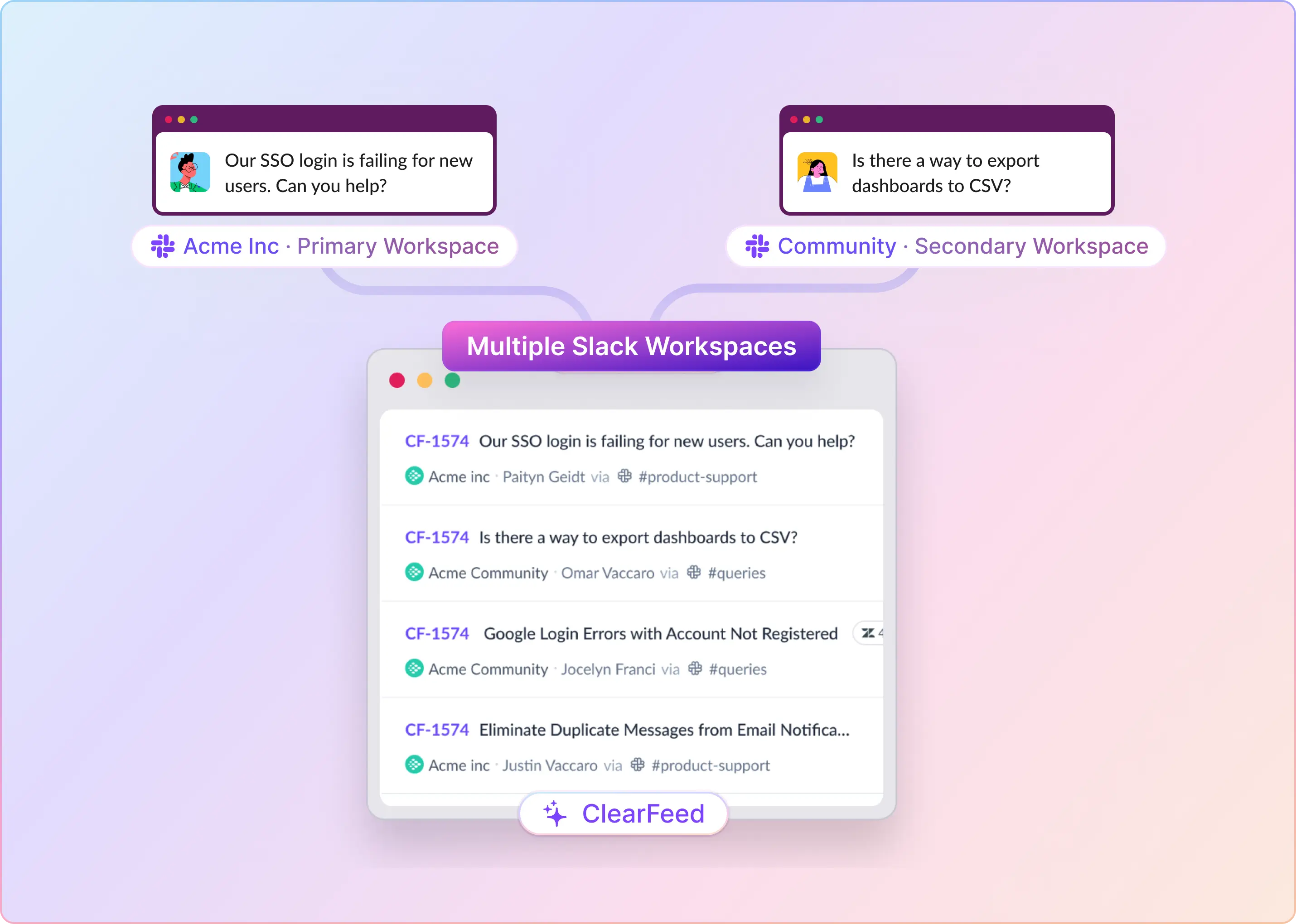
ClearFeed fits a different support pattern: B2B teams where customers, employees, or internal teams already ask for help in Slack, Slack Connect, Microsoft Teams, email, portal, web chat, or API-sourced channels, and the support team wants Slack to be the operating layer.
The same pattern shows up in customer conversations: teams may already have Freshdesk or Freshchat for part of support, while real requests still arrive through Slack, email, or customer channels and need to be manually turned into tracked work. In that case, the problem is not only the price of the Freshdesk license. It is the operational cost of monitoring multiple locations and deciding what warrants a ticket.
There are two common ClearFeed fits in a Freshdesk pricing evaluation.
Fit 1: Use ClearFeed with Freshdesk
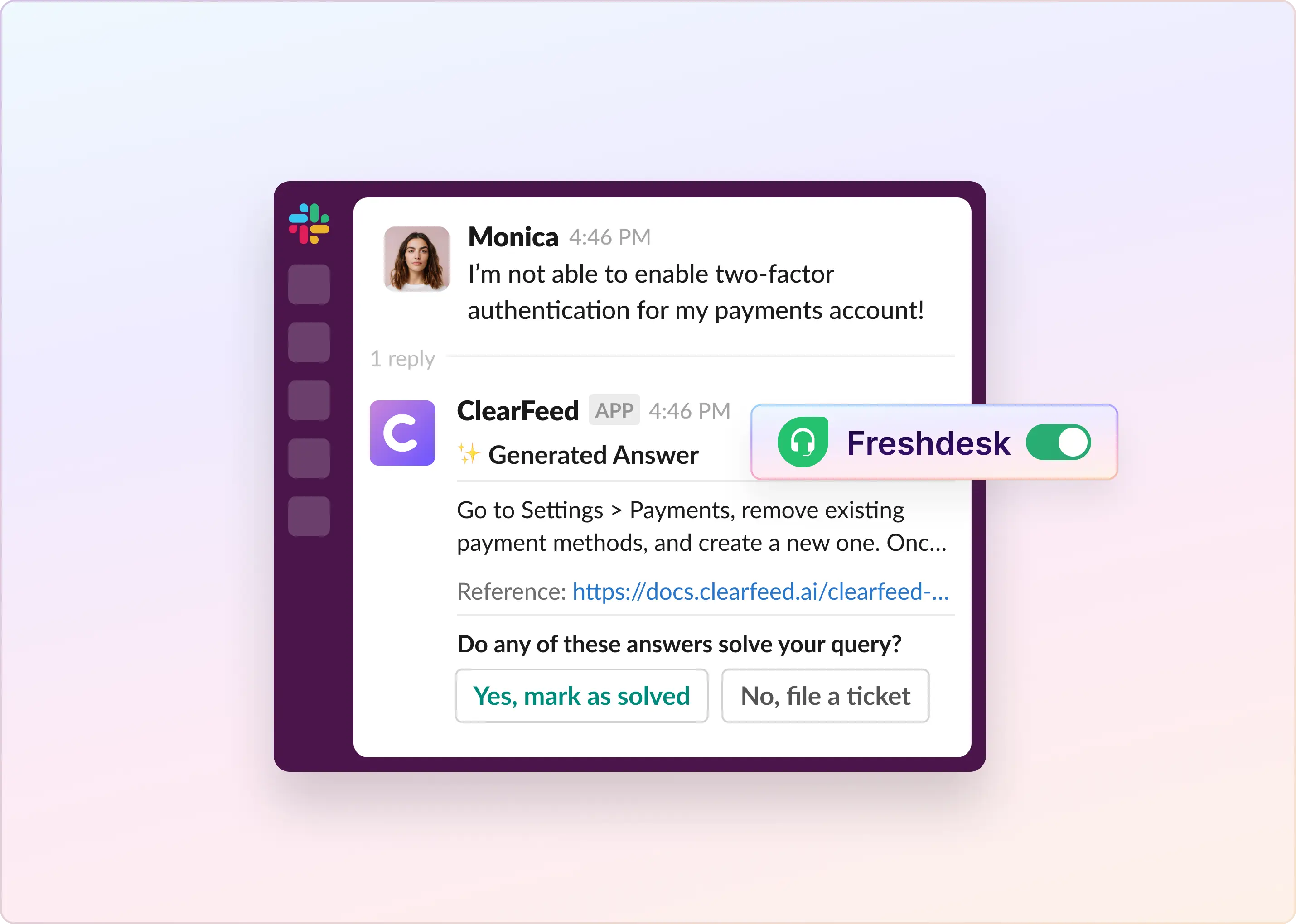
If Freshdesk should remain the ticketing system, ClearFeed can connect Slack workflows to Freshdesk tickets.
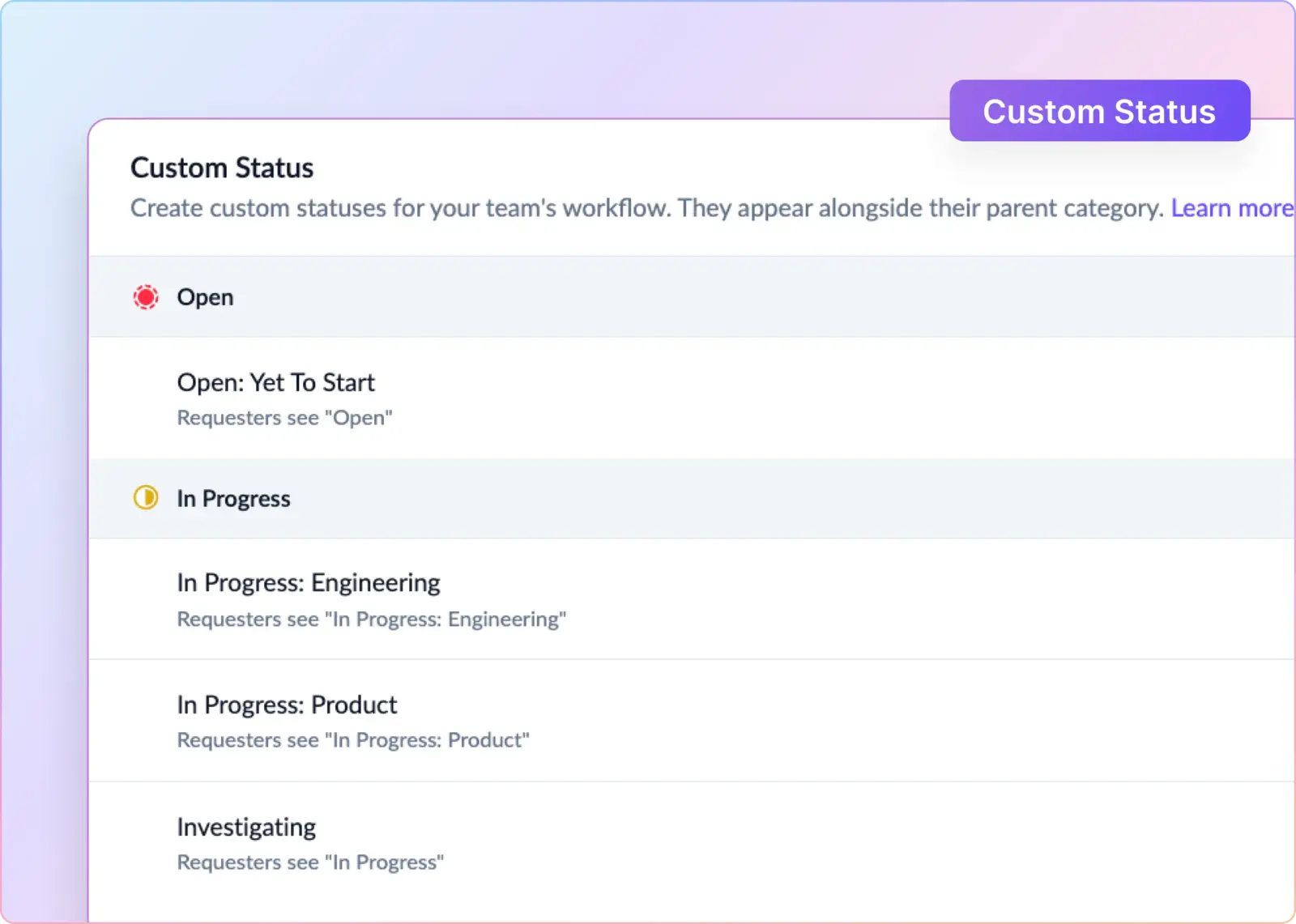
ClearFeed's Freshdesk integration supports creating Freshdesk tickets from Slack manually by emoji, automatically from new channel conversations, or from a triage channel. Once a Freshdesk ticket is created, Slack thread replies, and Freshdesk ticket comments can sync bidirectionally. The Slack thread can show the ticket title, ID, URL, and status. Freshdesk status changes can reflect in Slack, and triage-channel public comments can sync back to Freshdesk. Internal comments from triage can sync to Freshdesk private notes, and private notes from Freshdesk can sync back to triage.
That matters when Freshdesk is the system of record, but the work is happening in Slack.
Fit 2: Use ClearFeed as the Slack-first helpdesk layer
Some teams do not need a full Freshdesk deployment for every support workflow. They need a tracked queue for Slack or Slack Connect, selective ticket creation, SLAs, assignment, forms, automations, AI-assisted replies, and reporting.
ClearFeed can be used as a standalone Slack-native helpdesk with native ClearFeed tickets, customer portal, email ticketing, web chat, CSAT, Insights, and Slack triage. It can also bridge to external systems such as Freshdesk, Zendesk, Jira, Salesforce Service Cloud, Intercom, HubSpot, Linear, GitHub, ClickUp, and Asana.
The customer-insight pattern is consistent: teams often do not want every casual Slack message to become a ticket. They want the option to turn real issues into tracked work, keep lightweight conversations lightweight, and still report on response time, ownership, SLAs, and volume.
That is the question to ask during a Freshdesk pricing review:
Do you need Freshdesk as the main support suite, or a better operating layer for support that already happens in Slack?
Final Take
Freshdesk pricing is not hard to read, but it is easy to under-budget.
The base Freshdesk plans are straightforward: $19, $55, and $89 per agent/month on annual billing for Email and Ticketing. Freshdesk Omni is higher: $29, $79, and $119 per agent/month on annual billing. Freddy AI Copilot and Freddy AI Agent sessions can add meaningful cost, especially once AI moves from trial use to daily workflow.
Freshdesk is strongest when you want a conventional helpdesk or omnichannel support suite with Freshworks at the center. ClearFeed is worth considering when the real support motion is Slack-first, when Freshdesk should stay in place, but Slack needs better ticket sync, or when teams need selective ticketing, triage, SLAs, AI assistance, and reporting around Slack-based support.
The practical move is simple: price the workflow you actually run. If support lives in email and portal, Freshdesk may be clean. If it lives across Slack, Slack Connect, email, and other channels, the "Freshdesk pricing" question is really a support operations question.
FAQs
How much does Freshdesk cost in 2026?
Freshdesk Email and Ticketing is listed at $19, $55, and $89 per agent/month on annual billing for Growth, Pro, and Enterprise. Freshdesk Omni is listed at $29, $79, and $119 per agent/month on an annual billing plan.
Is Freshdesk free?
Freshworks lists a Free Program at $0 for 1 to 2 agents for 6 months. It is best treated as a starter option for small teams, not a long-term plan for growing support operations.
What is the difference between Freshdesk and Freshdesk Omni?
Freshdesk Email and Ticketing is closer to a classic helpdesk, with email, tickets, a knowledge base, automations, reporting, and portals. Freshdesk Omni is for broader omnichannel engagement across channels such as web, SMS, messaging, and email.
Does Freshdesk include AI?
Freshworks offers Freddy AI capabilities, but buyers should separate the line items. Freddy AI Copilot is a paid add-on listed at $29 per agent/month on an annual billing plan. Freddy AI Agent is session-based, with trial sessions included and paid session packs thereafter.
Can ClearFeed work with Freshdesk?
Yes. ClearFeed's Freshdesk integration can create Freshdesk tickets from Slack and sync Slack thread replies with Freshdesk ticket comments. It can also reflect Freshdesk ticket status in Slack and sync triage-channel comments and private notes according to the documented workflow.
Should I choose Freshdesk or ClearFeed?
Choose Freshdesk when you want Freshworks as the main helpdesk or omnichannel support suite. Consider ClearFeed when support work happens in Slack or Slack Connect, and you need a structured triage layer, Slack-native ticketing, or a bridge between Slack and Freshdesk.