Table of Contents

If switching between tools feels like part of your job, you’re not alone. Many teams juggle Slack conversations and work tracking in Linear, and context often gets lost in the process.
That’s why Linear Slack integration has become essential for modern product, engineering, and operations teams. When you connect Slack and Linear, teams can turn conversations into trackable issues, stay up to date on progress, and reduce back-and-forth between tools.
In the setups that work best, Slack becomes the front door for conversations, while Linear remains the place where engineering or product work is tracked.
In this guide, we’ll break down the most practical ways to set up a Slack Linear integration, from the Linear Slack app to automation tools and Slack-native platforms, and help you decide what works best for your workflow.
TL;DR
Slack works best as the front door for Linear work, while Linear stays the system of record for product and engineering issues.
The gist
- Native Linear Slack app supports manual issue creation, thread linking, notifications, and lightweight two-way visibility.
- Zapier adds no-code automation, like creating Linear issues from reactions or specific Slack channel messages.
- Native setup lacks automatic intake, ownership enforcement, triage queues, response tracking, SLAs, and private Slack collaboration.
- ClearFeed adds Slack-native triage, selective Linear escalation, two-way sync, AI summaries, classification, and late-response alerts.
- Best fit depends on volume: native Linear works for occasional issues; ClearFeed fits Slack-heavy support workflows.
Worth knowing: ClearFeed’s core angle is avoiding backlog noise by creating Linear issues only when a Slack conversation truly needs engineering follow-up.
What Are the Different Ways of Integrating Linear and Slack?
There are three common approaches to integrating Linear with Slack, depending on how much automation and control your team needs:
- Linear Slack App – Best for basic Linear Slack notifications and manual issue linking
- Automation tools like Zapier – Useful if you want to automatically create Linear issues from Slack.
- Slack-native platforms like ClearFeed – Designed for teams that want to manage Slack Linear integration workflows, including Linear issues and requests, directly inside Slack.
Each option supports Slack Linear integration at a different depth, so the right choice depends on how your team works and what you want when you connect Linear to Slack.
How To Integrate Linear and Slack Using the Linear Slack App?
The most straightforward way to set up a Linear Slack integration is to use Linear’s native Slack app. This option works well for teams that want basic visibility and manual issue creation without additional automation.
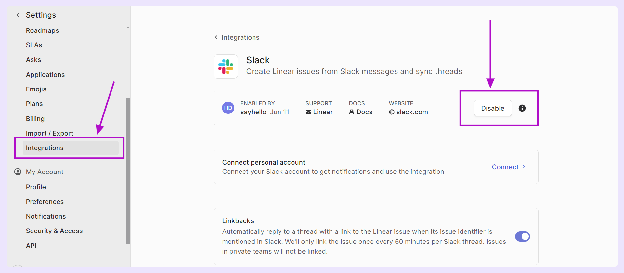
To get started, open your Slack workspace and search for the Linear Slack app in the Slack App Directory. Once installed, you can enable the integration from your Linear workspace settings.
This setup is ideal if your primary goal is to receive Linear Slack notifications and link conversations to issues as needed.
If your team mainly wants visibility, occasional manual issue creation, and lightweight references back to Linear, the native app usually gets the job done.
What the Linear Slack App Lets You Do
With the native Slack Linear integration, teams can:
- Create Linear issues from Slack: You can convert a Slack message or thread into a Linear issue using the “More actions” menu. This supports workflows such as creating a Linear issue from Slack and a Linear ticket from a Slack message, especially for bug reports or feature requests discussed in channels.
- Link Slack threads to Linear issues: By mentioning a Linear issue inside a Slack thread, you can sync updates between the two tools. When an issue is updated or closed in Linear, the linked Slack thread is notified, which directly supports workflows that link Linear to a Slack thread.
- Receive Linear Slack notifications: Teams can configure Linear and Slack notifications to post updates about issue status changes, comments, or assignments to specific Slack channels. This helps keep stakeholders informed without requiring them to constantly open Linear.
- Maintain two-way visibility between Slack and Linear: Comments and updates in Linear appear in Slack, enabling lightweight collaboration between teammates who primarily use Slack and those who primarily use Linear.
That visibility is useful, but it still behaves more like a notification layer than a full Slack-based queue, triage, or support workflow.
When the Native Linear–Slack Integration Works Best
The native Linear Slack integration is a good fit when:
- Issue creation from Slack is occasional and manual
- Linear Slack notifications are enough to keep teams aligned
- You do not need automation or workflow enforcement in your Linear Slack integration setup
However, many teams outgrow the native Linear Slack integration once Slack becomes the primary channel for requests, bugs, and questions.
Important Limitation To Be Aware Of
The native Slack Linear integration does not automatically create issues from every relevant Slack message. Actions like creating a Linear issue from a Slack thread still require manual steps, and there’s no built-in way to enforce ownership, triage, or response tracking inside Slack.
For teams working in Slack Connect channels, or teams that need intake forms, private collaboration, SLAs, or AI-assisted routing, that limitation starts to show up pretty quickly.
This limitation is what drives teams to explore automation tools or Slack-native workflow platforms later on.
To address these gaps, users should consider integrating with platforms such as Zapier and ClearFeed.
What Are Some Key Features of Zapier’s Slack-Linear Integration?
Integrating Slack with Linear via Zapier lets you automate workflows between the two platforms without writing any code. Here are some specific actions you can perform with this integration:
Zapier is great for trigger-and-action automation. It is less useful when you need a shared place for humans to triage issues, discuss them privately, and keep all of the context attached to the thread.
- Automatically create Linear issues from Slack: Set up an automation to generate Linear issues whenever reactions are added to messages or new messages are posted in specific Slack channels. This process helps turn Slack discussions and instant feedback into actionable tasks in your project management tool.
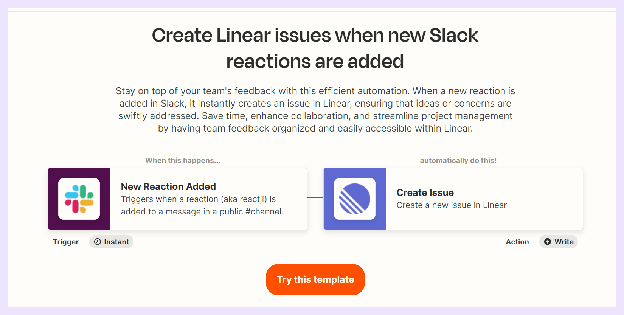
- Automate issue creation for key messages: If certain messages in Slack are crucial, you can automate creating Linear issues from these messages to ensure important conversations are promptly addressed.
- Fine-grained control over notifications in Slack: Zapier offers fine-grained controls for Slack notifications from Linear (beyond Linear’s native offering). Whenever there's an update in Linear—such as a status change or a new comment—an automated message can be sent to a designated Slack channel.
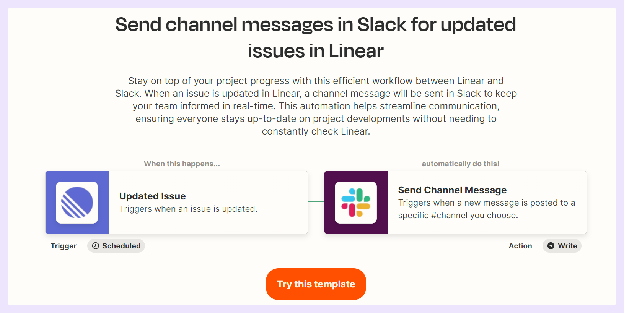
How To Integrate Slack and Linear Using Zapier?
Here's how to set up Slack-Linear integration using Zapier:
- Log in to Zapier, search for the Linear app, and select New Issue as the event for your Zapier Linear integration.
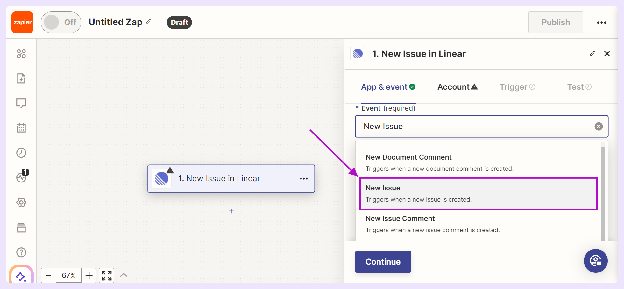
- Connect your Linear account and fill in the required details to configure the trigger for your Linear Zapier integration.
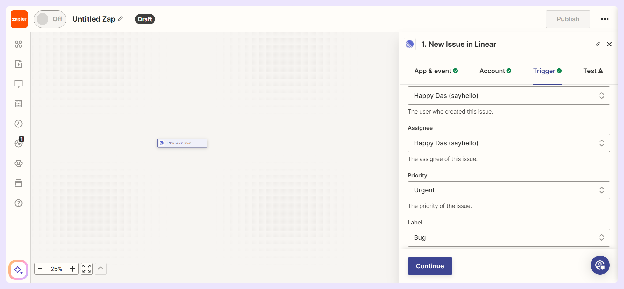
- Test this trigger to confirm the setup is correct.
- Connect your Slack account, then select the automated action you want Slack to perform during the Slack Linear integration.
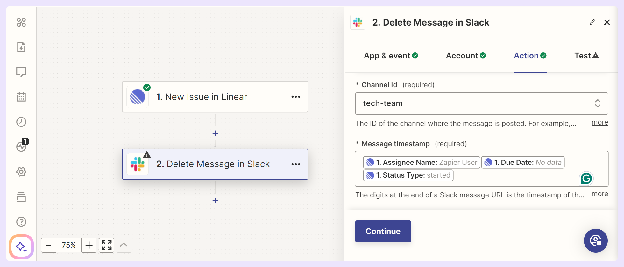
- Click Continue, save your settings, and run one more test to confirm that your Linear-to-Slack workflow is working end-to-end.
How To Integrate Slack and Linear Using ClearFeed?
Want to run a help desk on Slack while managing issues in Linear? Then ClearFeed is the right solution for you. ClearFeed is a conversational support platform designed for customer and employee support on Slack. It integrates closely with issue management systems such as Linear, keeps Slack as the intake and collaboration layer, and lets teams use Linear either as the primary ticketing system or as the engineering escalation layer.
Here are some key features of ClearFeed that take Slack Linear integration to the next level:
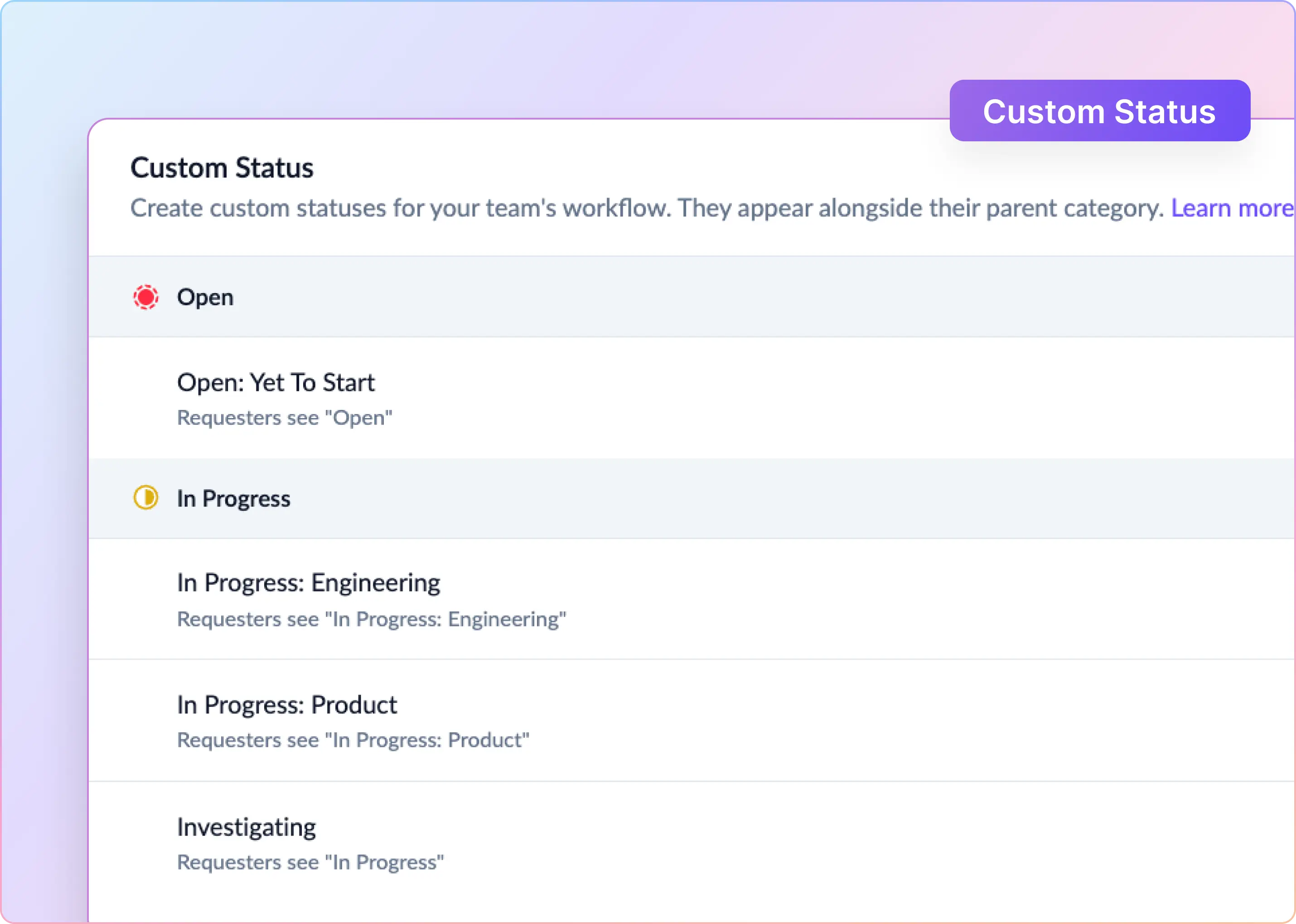
- Flexible issue filing from Slack: Teams can create Linear issues from request channels with a configured emoji, from a triage channel using More Actions, or enable automatic ticketing so every new Slack conversation becomes a Linear ticket.
- Two ways to use Linear: If Linear is your main system of record, ClearFeed can send Slack conversations straight into Linear ticketing. If Slack is still your support hub, ClearFeed can keep SLAs and responder workflows in Slack while creating Linear issues only for the items that need engineering follow-up.
- Real two-way sync: Replies in the Slack thread and comments in the Linear issue stay in sync, and status updates in Linear can be reflected back in Slack, so support, CS, and engineering are all working from the same conversation.
- AI-enriched issue context: When ClearFeed files a Linear issue, it can generate a short summary of the thread, draft a title from the conversation, and carry over the original messages, attachments, requester details, and other metadata instead of making someone copy-paste everything by hand.
- Private triage in Slack: Support and operations teams can collaborate in [Triage Channels](https://clearfeed.ai/blogs/clearfeed-triage-channels-a-new-way-to-work-with-customers-on-slack), keep internal discussion off the customer thread, and still escalate the right items to Linear. That is especially useful in Slack Connect setups where teams often want the internal Linear issue to stay private.
- Human-in-the-loop AI assist: ClearFeed can suggest replies from your docs, Confluence, Notion, and past Slack conversations, summarize long threads, and surface previous related requests. Teams can review and edit those suggestions before posting, which is usually a much better fit than blindly auto-replying.
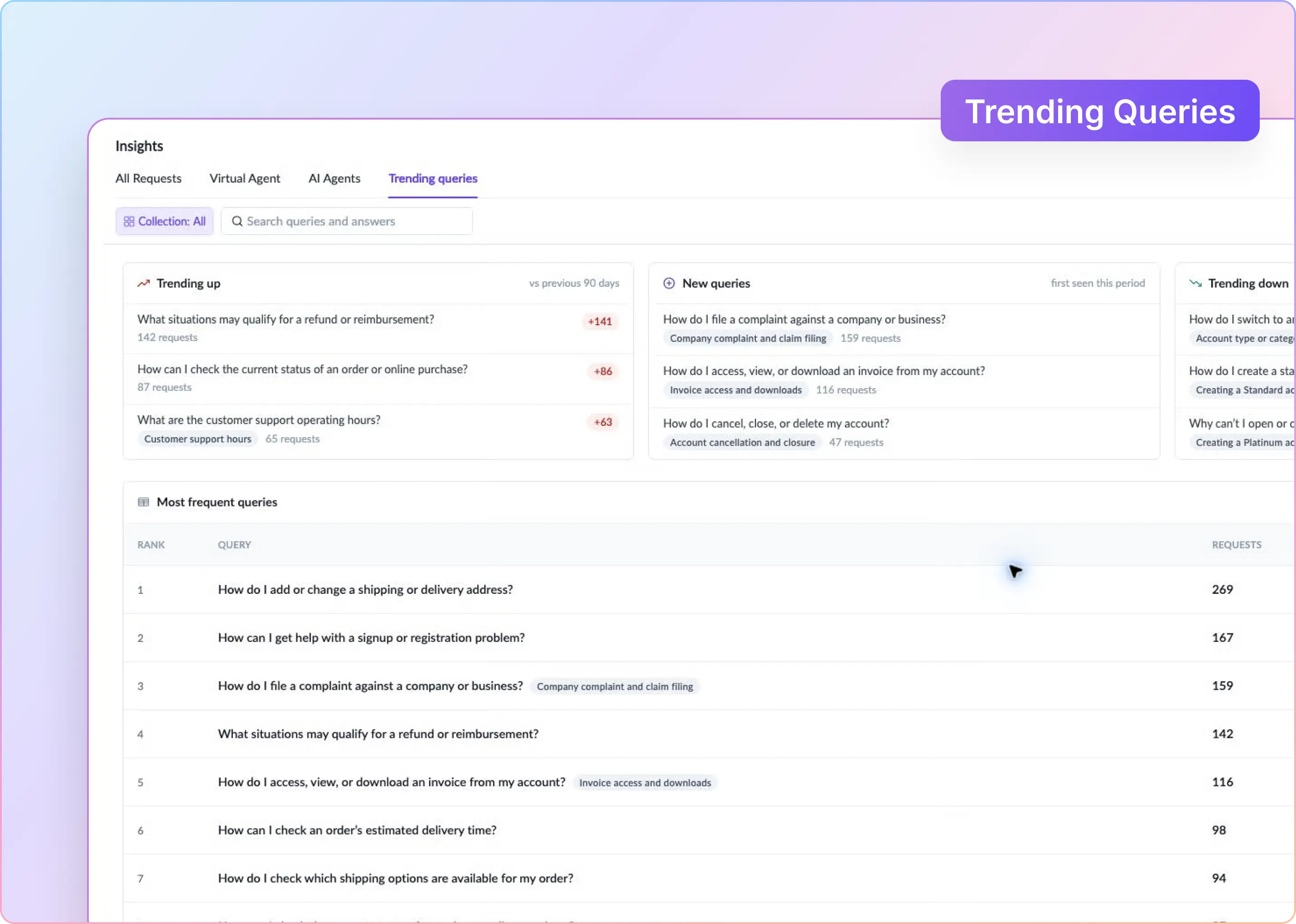
- AI-based triage and selective escalation: ClearFeed can use AI fields and automations to classify messages as bugs, feature requests, how-to questions, urgent issues, or low-priority chatter. That lets teams create Linear issues only for the messages that matter, rather than turning every Slack thread into backlog noise.
- Better follow-through on every Slack request: Even when a message does not become a Linear issue, ClearFeed can still track the thread, alert the right people when responses are late, and keep unresolved requests from disappearing into a busy channel.
In short, Engineering and Operations teams can run a well-oiled help desk on Slack with Linear. Learn more about ClearFeed’s Linear-Slack integration here. If you want to learn how using ClearFeed with Linear and Slack can simplify communication, schedule a demo session with us!