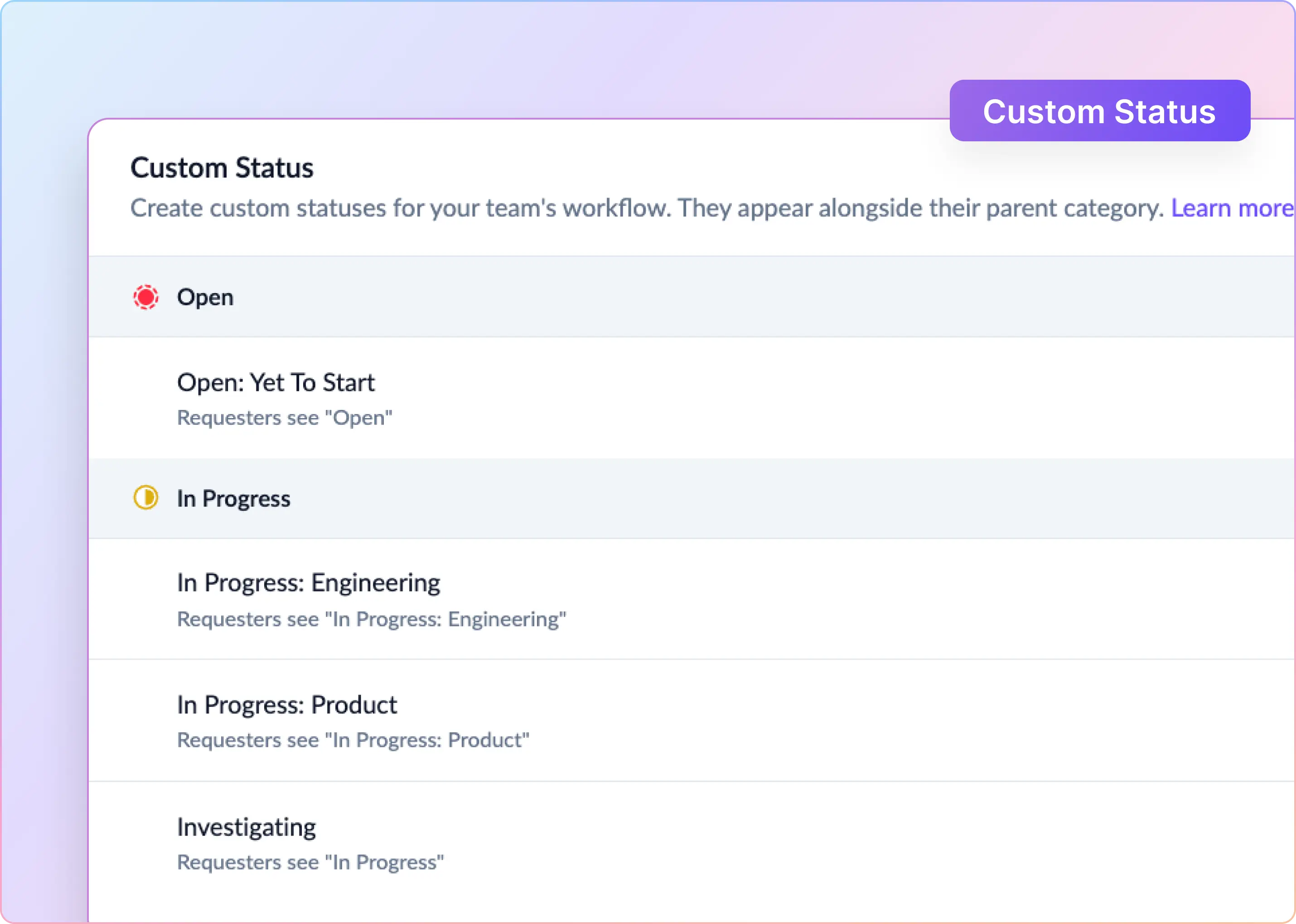
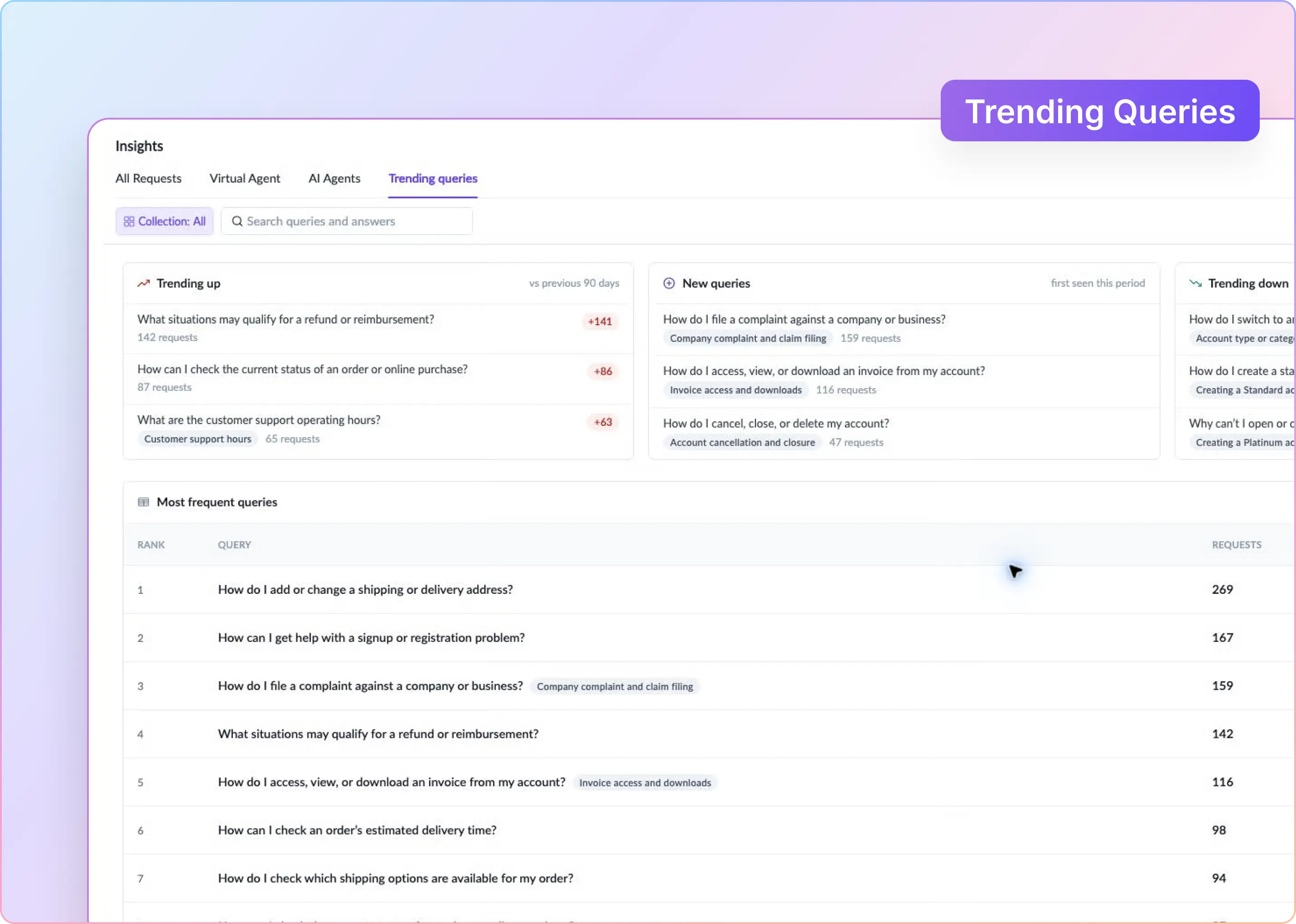
Table of Contents

Toggling between Slack and Intercom eats up the time your support team doesn't have. A question lands in Slack, a message arrives through Intercom, and somewhere in the switching, a customer issue gets buried. The tools multiply; the focus doesn't.
This guide covers how to connect Slack and Intercom and how support teams use the integration to reduce response times and keep fewer conversations from falling through the cracks.
TL;DR
Intercom’s native Slack integration connects customer Slack conversations to Intercom, while ClearFeed adds more Slack-native control over tickets, sync, privacy, and automation.
The gist
- Native setup starts in Intercom under Settings, Channels, Slack, then connects a workspace, channels, triggers, and lead-matching rules.
- Email-based user matching is recommended because creating a new lead for every Slack conversation fragments customer history.
- Intercom can create Inbox conversations from Slack, sync replies back to threads, support Fin replies, and post ticket updates.
- Native limits include public-channel privacy risks, no move from public threads to private DMs, one-way notification channels, and paid-plan requirements for advanced notifications.
- ClearFeed adds emoji ticket actions, imported Intercom ticket types as forms, configurable message and status sync modes, a choice between Ticket Mode and Conversation Mode, a reverse Intercom flow for tickets that started outside Slack, and full ticket lifecycle management from Slack.
Worth knowing: Use native Intercom when Slack is just another customer channel; use ClearFeed when Slack is where the support team actually wants to work.
What Slack and Intercom Integration Solves
The best Slack and Intercom integration reduces context switching.
A customer asks a question in Slack, your team sees it in the same place, and Intercom keeps the history, ownership, and customer record intact. That matters because support teams usually do not struggle with a lack of information. They struggle with information being split across tools.
Intercom's native Slack channel is designed for that problem. When a message comes in through a connected Slack channel, Intercom can turn it into a conversation in the Inbox so your team can reply without losing the thread.
How To Connect Slack to Intercom?
Setting up Intercom's native Slack channel is straightforward, but a few choices matter.
- In Intercom, go to Settings → Channels → Slack.
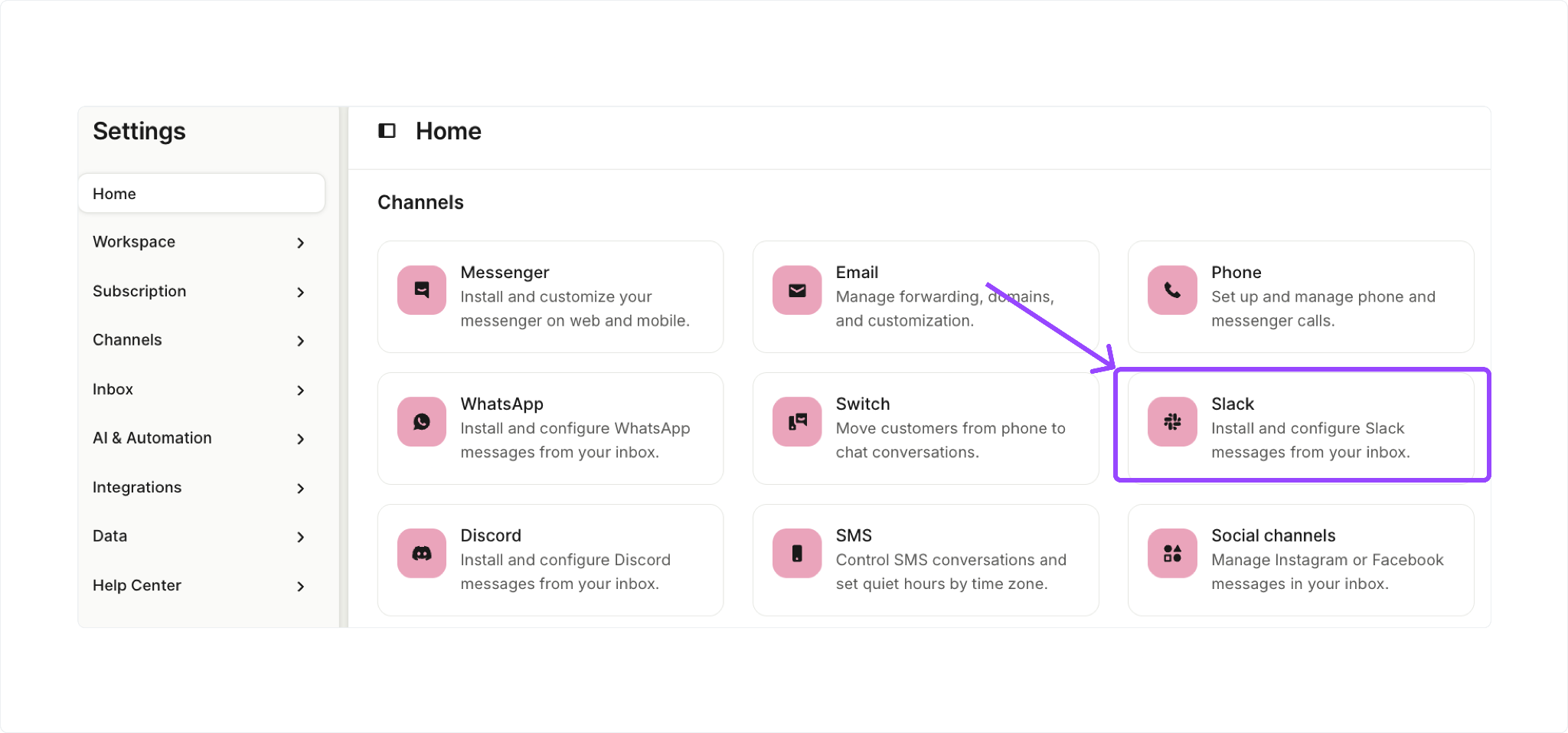
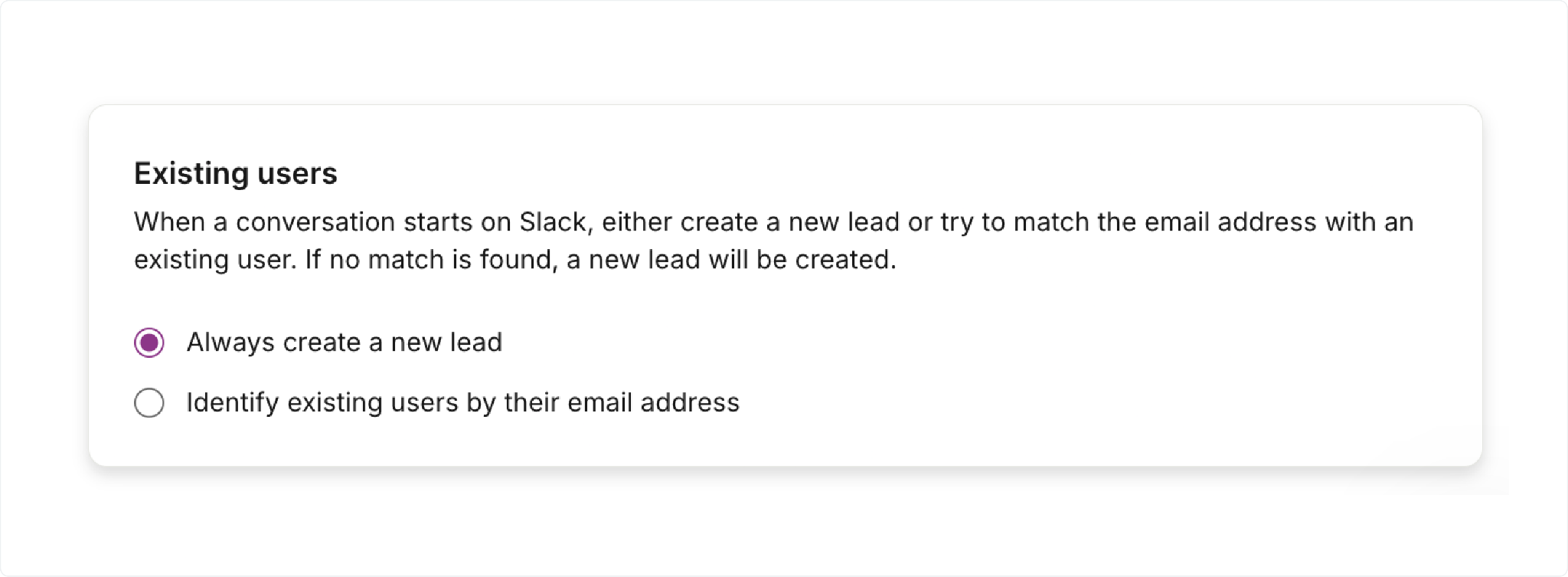
You'll be directed to a page asking how you'd like to handle customer identities in Slack conversations.
- Choose your lead creation method:
- Always create a new lead: Creates a fresh contact record for every Slack conversation, even if that person has messaged before. This fragments customer profiles and makes it harder to see conversation history.
- Identify existing users by their email address: Matches incoming Slack messages to existing contacts by email. Keeps all conversations from the same customer unified in a single profile and creates new leads only when no match is found. (This is the recommended option.)
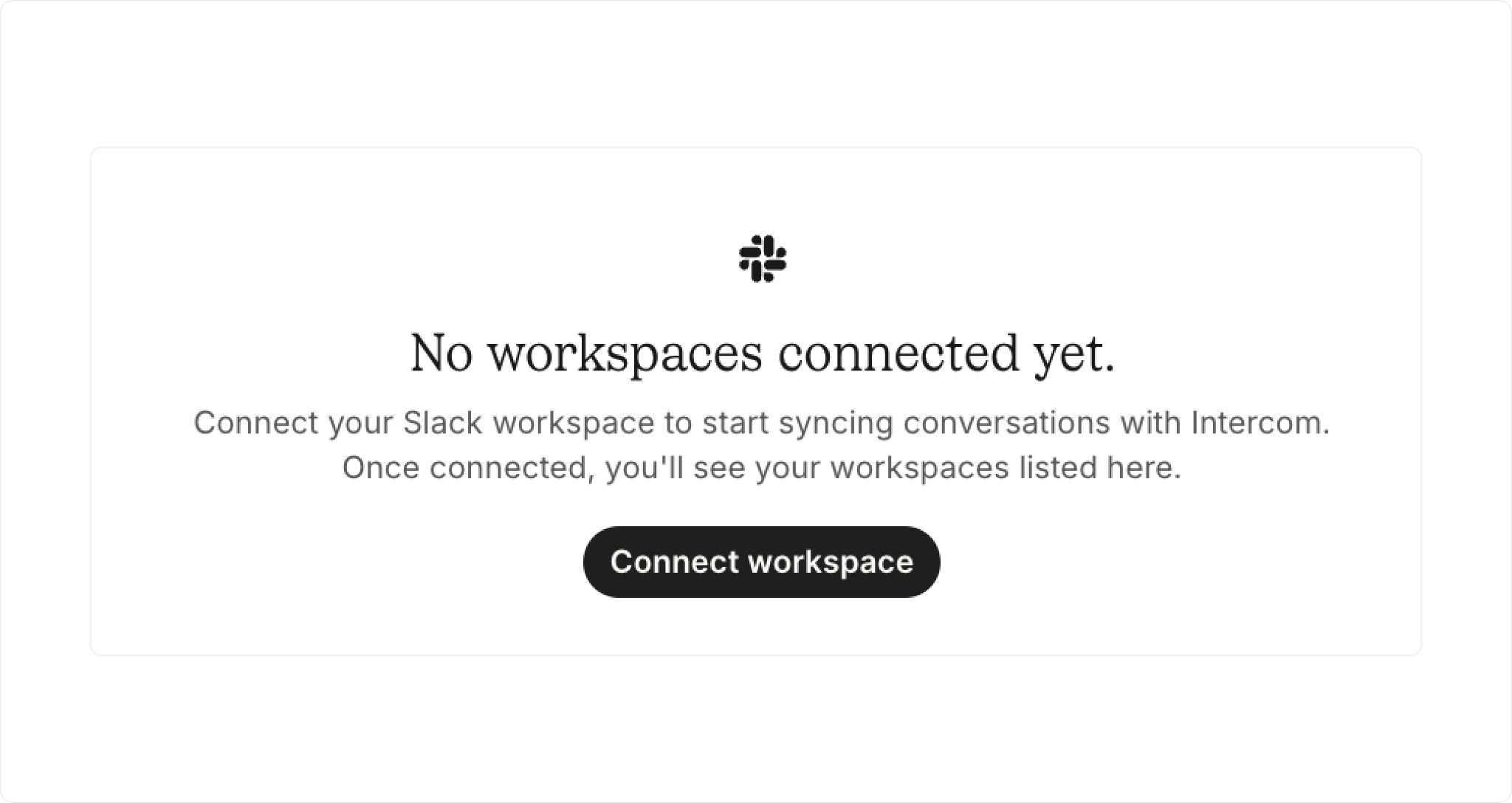
- Connect the Slack workspace you want to use.
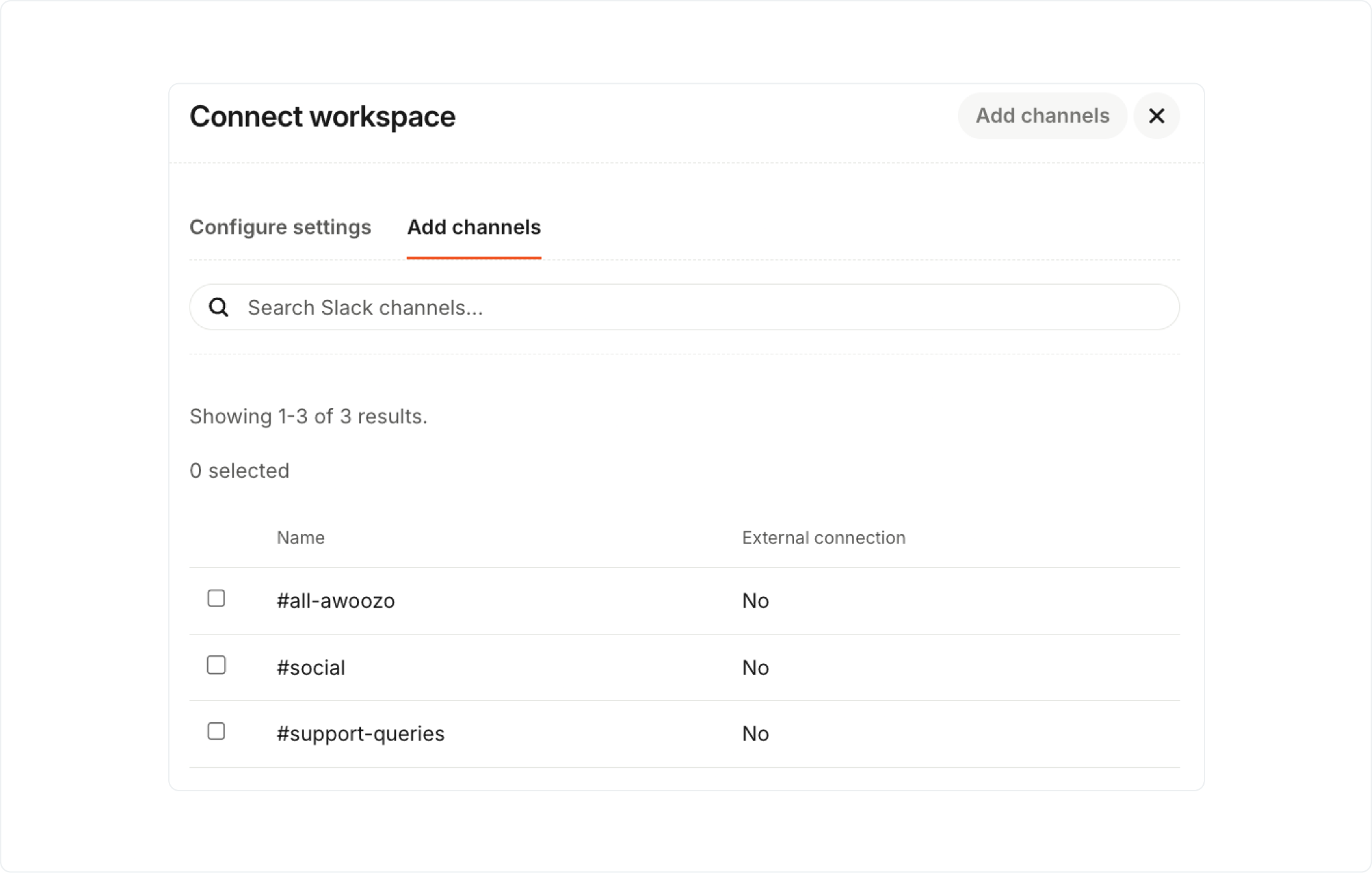
- Select which Slack channels connect to Intercom. Go to the "Add channels" tab and check the boxes for the channels you want Intercom to monitor (for example, #support-queries for customer conversations). You can connect multiple channels, and each can have its own settings if needed.
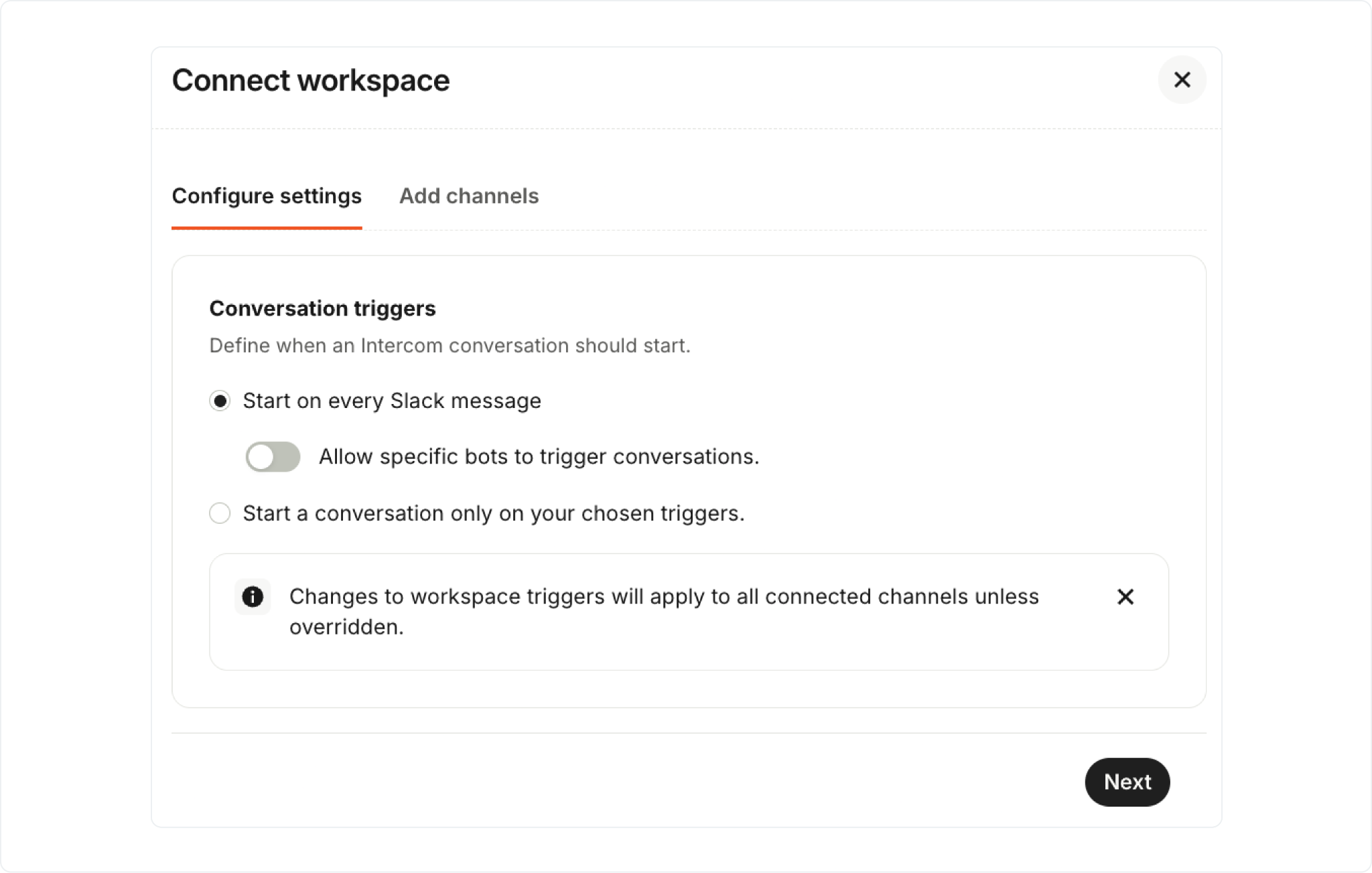
- Set when conversations should trigger. Choose your conversation trigger in "Configure settings":
- Start on every Slack message (captures all activity)
- Allow specific bots to trigger conversations (only bot messages count)
- Start a conversation only on custom triggers (most controlled, requires manual setup)
- Decide how to match Slack messages to existing users. Choose your lead creation method:
- Always create a new lead (creates a fresh record for every message, fragments customer profiles)
- Identify existing users by their email address (recommended: keeps all conversations from the same person unified)
Note that workspace-level settings apply to all channels. Any trigger or lead-matching rules you set at the workspace level will apply to all connected channels unless you override them per channel.
A few setup details are worth calling out:
- You can connect multiple Slack workspaces, but each Slack workspace can only be linked to one Intercom workspace.
- Private Slack channels are supported, but you need to invite the Intercom app into the channel from Slack.
- If your Slack workspace uses Enterprise Grid, the Intercom app cannot be installed in the primary workspace.
- Intercom will not create new conversations from older Slack threads that predate the connection.
Those details sound small, but they matter when you are planning a rollout for a real support team.
What Intercom’s Native Slack Integration Can Do
Intercom’s native Slack integration is a two-way support channel, not just a notification feed.
- Core workflow: When a customer messages a connected Slack channel, Intercom can create a conversation in the Inbox. Your team gets a central support record with customer history, ownership, and the rest of Intercom’s support tools, while the conversation itself continues in Slack.
- Conversation sync: Replies from Intercom can post back to the same Slack thread, with attachments and rich formatting preserved. This keeps both sides of the conversation usable without forcing customers or teammates to repeat context.
- Reply options and workspace coverage: Fin can respond directly in Slack conversations, and teammates can reply from Intercom as usual. Teammates can also authenticate their Slack workspace so replies sent through Intercom appear from their Slack identity. The integration supports public channels, private channels, Slack Connect, and multiple Slack workspaces.
- Additional capabilities: Intercom can manage tickets from Slack and post ticket status updates back into the thread. It can also send one-off outbound messages to Slack channels, although those broadcasts are currently text-only.
What Intercom’s Native Slack Integration Cannot Do
Native Intercom is solid, but it still has boundaries. Here's what that means for your support workflow.
- Public channels expose sensitive customer data. Any custom data, customer emails, or personal information shared in public Slack channels is visible to all members. This creates compliance and privacy risks when discussing billing, contact details, or account information.
- You can't move a conversation from a public channel to a private DM. Once a conversation starts in a channel, it stays there. If sensitive information surfaces mid-discussion, you're stuck in the public thread with no way to escalate privately.
- Notification-only channels are one-way. Channels configured for Post Slack notifications only are designed for one-way communication, and replies in notification threads do not sync back to the original Intercom conversation.
- Advanced notifications require paid plans. Slack notifications rely on Workflows, which aren't available on Essential plans. You'll need to upgrade to Advanced or Expert to automate notifications for specific triggers or keywords.
How ClearFeed Extends Slack and Intercom Integration
ClearFeed bridges the gap between Slack and Intercom by addressing the core limitations that slow down support teams.
- Ticket Mode or Conversation Mode. Pick the Intercom object you actually want to work with. In Ticket Mode, Slack threads become Intercom tickets with two-way message sync, status sync, and title/ID/URL surfaced on the Slack side. In Conversation Mode, Slack threads become Intercom conversations, with open/snoozed/closed states, assignments, attachments, and internal notes all syncing bi-directionally. Choose the mode when you connect Intercom in ClearFeed — it can only be switched by disconnecting and reintegrating.
- Creating tickets without leaving Slack. Native Intercom requires agents to jump between Slack and Intercom to manage conversations. ClearFeed keeps everything in Slack: agents can create tickets using emoji reactions, automatic triggers, triage buttons, or customizable forms — all without switching windows. The full conversation history stays threaded on Slack, and ticket details post directly to the channel.
- Flexible sync that doesn't overwhelm. ClearFeed exposes four message sync modes — two-way, forward-only (Slack → Intercom), backward-only (Intercom → Slack), or no sync — and a separate status sync toggle for Solved/Reopened events. Configure it per collection or override per ticket from the request thread's three-dot menu. Status changes, internal notes, and attachments all respect the sync mode you choose — giving teams control instead of noise.
- Handling sensitive requests privately. Some conversations shouldn't live in public channels — billing disputes, account issues, complaints. ClearFeed keeps sensitive work out of public view by routing intake through a Triage channel that only responders can see. If you need to file tickets privately from Slack DMs, the File Ticket button, or the /cf-file shortcut, that path is available on the Internal Helpdesk and Integrations editions of ClearFeed.
- Assigning and resolving instantly. Instead of opening Intercom, finding the ticket, and updating status, agents use emoji reactions right in Slack. A 👀 emoji assigns the ticket to the reacting user and moves it from the initial state to In Progress. A ✅ marks the Intercom ticket Closed. Custom emoji rules can be configured per team or collection.
- Forms that align with your ticket types. ClearFeed imports your existing Intercom Customer ticket types (only Customer ticket types are importable today) and lets you configure forms with custom fields, defaults, placeholders, and field-level permissions. Some fields appear only to responders, others to requesters. Requester Email, Title, and Description are pre-filled by ClearFeed. The result is faster ticket creation with fewer back-and-forth clarifications.
- Automatic labels for reporting. Every ClearFeed-created ticket is tagged in Intercom with clearfeed, clearfeed-slack-channel (naming the source Slack channel), and the form used to create it — so you can filter, route, and report on Slack-originated volume inside Intercom.
- Reverse Intercom flow. If a ticket starts in Intercom via email or the help center, ClearFeed can pull it into a monitored Slack channel and keep comments and status bi-directionally in sync — so agents can still work Slack-first without missing anything that arrived through Intercom's own front doors. (This works for Intercom tickets, not conversations created directly in Intercom.)
- One workspace for all support work. Agents manage the full ticket lifecycle from Slack: creating, assigning, syncing messages, resolving, and unlinking tickets. The thread becomes the single source of truth — no more toggling between Slack and Intercom, no lost context, no repeated questions.
Native Intercom vs. ClearFeed: Which One Should You Use?
Use native Intercom if your goal is simple and clear:
- Let customers start conversations in Slack.
- Keep the record in Intercom.
- Let Fin and teammates respond from the Inbox.
- Avoid adding another workflow layer.
Use ClearFeed if your team wants Slack to be the support cockpit:
- You want tighter control over ticket and conversation handling.
- You want custom emoji automation and options for sync direction.
- You want internal notes, labels, and more Slack-native workflow design.
- You want the support process to live in Slack first, not just land there.
A good rule of thumb is this: native Intercom is enough for connection, but ClearFeed is better for operational control.
FAQs
Can Customers DM Support in Slack?
Not directly through the native Intercom flow. Slack DMs must be started from the Inbox, not by the customer.
Can I Connect Private Slack Channels?
Yes. Intercom supports private channels, as long as the app is added correctly from Slack.
Can One Slack Workspace Connect to Multiple Intercom Workspaces?
No. Intercom says each Slack workspace can only be linked to one Intercom workspace.
Bottom Line
If you want to integrate Slack and Intercom, the first decision is not technical. It is structural.
If Slack is just a place where customer messages should arrive and then be managed inside Intercom, the native integration is a clean fit. If Slack is where your support team actually works and you want more control over sync, ticket handling, and automation, ClearFeed gives you a deeper layer on top of Slack. Start a free trial or book a demo.